
In May 2024, Pakistan’s Prime Minister declared a national emergency over something that doesn’t make headlines the way a flood or an earthquake does. Pakistan has 25 million children out of school, and Learning Poverty — the percentage of 10-year-olds who cannot read and understand a simple text — sits at 79%. In Sindh, the picture is sharper still: only 4.5% of Grade 3 children can read in Urdu/Sindhi, and 9.1% can solve basic arithmetic divisions. These are not new facts to anyone working in Sindh’s education sector. What is new is that the province has now implemented an internationally acclaimed, pedagogical model that can reverse these facts — and its government intends to integrate this teaching model within the education policy and scale it. that has already a solid policy in place (2024) and said yes to scaling it.
What was tested, and where?
Between early 2025 and May 2026, the Sindh’s School Education & Literacy Department (SELD) in partnership with Idara-e-Taleem-o-Aagahi (ITA) and the FCDO funded-DARE-RC Programme (implemented by OPM Pakistan), piloted Scaling TaRL Through Mainstream Systems — a system embedded initiative built to answer one specific question: can Teaching at the Right Level (TaRL), be absorbed into the government system , using government teachers within existing structures and infrastructure?
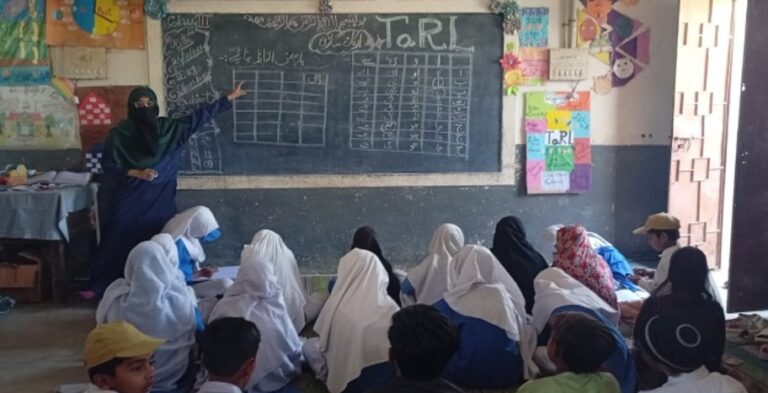
The pilot was deliberately designed to stress-test that question across two very different realities. One district, Karachi West, brought urban density, high migrations, and a multilingual student population. Umerkot brought a rural, low-resource, Sindhi-medium, majority-Hindu, a border district with some of the weakest baseline indicators in the province. Across both, 223 schools were onboarded, 62 SELD, Provincial Institute of Teacher Education (PITE) nominated Master Trainers were trained, and over four cohorts of students (46% girls), 472 trained teachers ran 60-day TaRL camps that reached 20,128 children..
Reaching every child: what it reveals about geography and gender
Rural Umerkot didn’t just keep up, it pulled ahead
Karachi West and Umerkot could not have started from more different places. Karachi West is a dense, high-migration urban district of roughly 768,600 school-age children, with 39% out of school. Umerkot is a rural, desert-border district of about 387,800 school-age children — smaller, but far more excluded, with 54.9% out of school, and only 36.3% of children holding a birth registration.
Given that gap, Umerkot might reasonably have been expected to trail. Instead, by endline it matched or outperformed Karachi West on every advanced-learning measure:
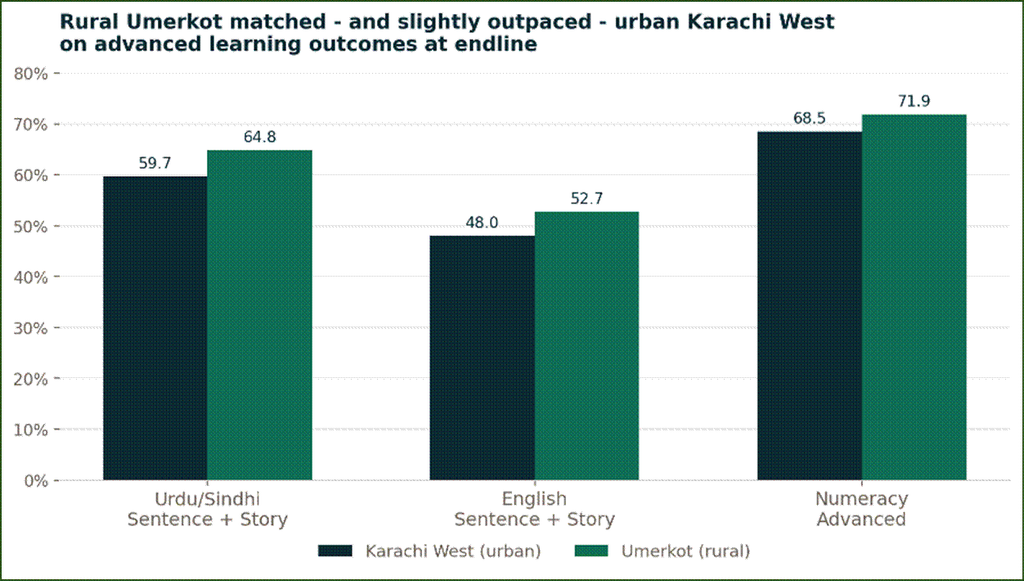
Figure 1. Karachi West vs. Umerkot, advanced-band endline outcomes by subject.
Umerkot reached 64.8% combined Sentence-plus-Story reading in Urdu/Sindhi against Karachi West’s 59.7%, 52.7% against 48.0% in English, and 71.9% advanced numeracy against 68.5%. Karachi West held a narrow edge only at the very top Story-only band in both languages — plausibly a reflection of greater urban print exposure — but Umerkot converted more children overall into competent readers and problem-solvers. That’s a strong signal for scale-up: the model’s impact isn’t propped up by urban infrastructure or advantage. It worked hardest in the district that needed it most.
Girls vs. boys: comparable gains, with girls slightly ahead in literacy
The pilot reached 10,884 boys (54%) and 9,244 girls (46%) — a healthy, balanced split. Both groups saw advanced-proficiency rates roughly quadruple to quintuple over a single 60-day cycle, with a modest divergence by subject:
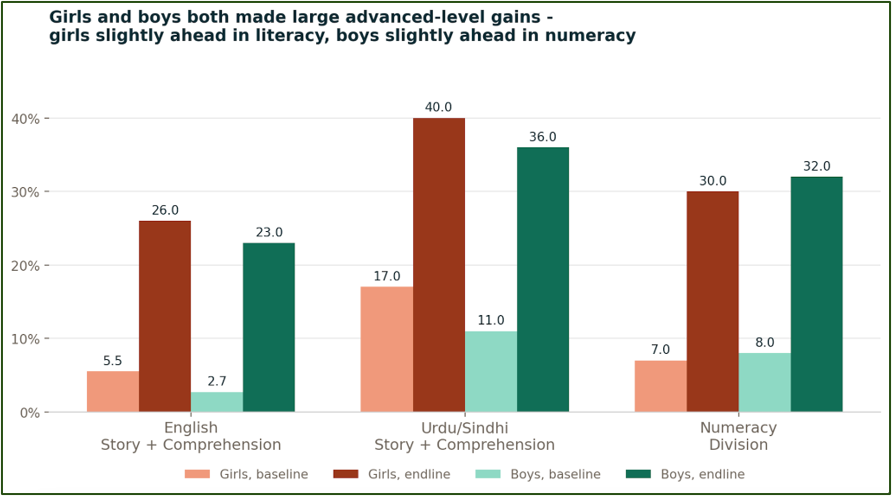
Figure 2. Girls vs. boys, baseline-to-endline advanced-band outcomes by subject.
In English, girls moved from 5.5% to 26% at the Story and Comprehension level, ahead of boys’ 2.7% to 23%. In Urdu/Sindhi, girls again edged ahead, from 17% to 40% versus boys’ 11% to 36%. In numeracy, the pattern flips modestly: boys reached 32% at Division level against girls’ 30%, up from 8% and 7% respectively.
None of these gaps suggest that the model favours one gender over the other structurally — both saw dramatic, comparable improvement. If anything, girls’ slightly stronger literacy gains are a notable finding in a context where girls’ reading outcomes nationally tend to fall further behind the longer they stay in school. For a province actively working to close gender gaps in foundational learning, this is evidence that TaRL’s design is gender-equitable in practice, not just in intent.
| Geography and gender are two of the most common fault lines along which education interventions quietly underperform — working well in easy contexts and for advantaged groups, less well elsewhere. This case shows neither fault line opening up here. That consistency, across a rural border district and an urban migrant settlement, across girls and boys alike, is exactly the kind of evidence a province-wide scale-up case needs. |
One of the main findings is that not only have scores improved,they have changed in a manner that has led to a redistribution of children out of the lowest learning bands and into fluent, functional literacy and numeracy. This finding has been validated independently by DARE-RC’s research team led by researchers from the University of Cambridge, Iqra University and AMBA UK that is working on the evaluation of the Sindh TaRL implementation project.
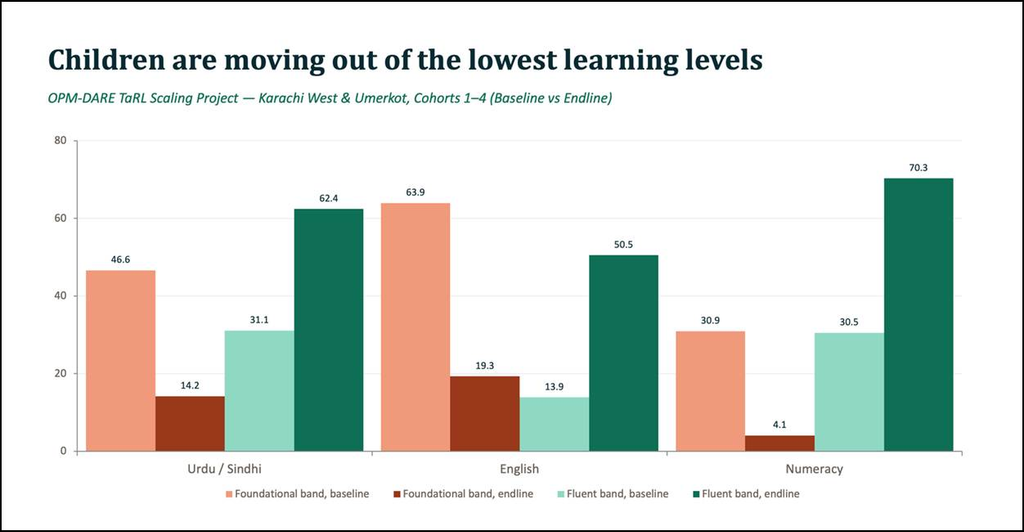
Figure 3. Overall results showing a decline in beginner levels (red) and a rise in advanced levels (green).
By endline, roughly two-thirds of assessed children were reading connected text in their local language, and an estimated 14,158 learners — more than double the baseline figure of about 6,136 — could perform subtraction or division.
Teacher voices
Ms. Sonia Kanwal (Primary Section Head, EAB GBHS Orangi No. 10, Karachi West) — on TaRL as a system-level shift:“This intervention has changed our perspective. It focuses squarely on foundational learning, giving students a chance to pace up and achieve academic success. I advocate for training more of our staff in this student-centered approach to enhance foundational skills across all primary
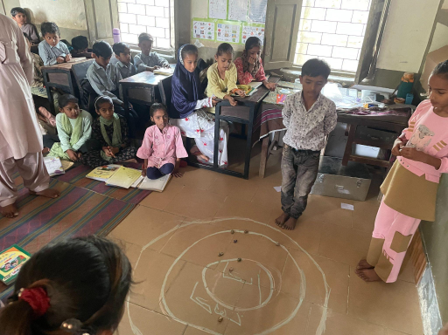
Shazia Naz (GBPS Orangi, Karachi West, 16 years’ experience) — on why math specifically needed TaRL:
“Other subjects often have activities to engage children, but mathematics is more abstract. The lack of play-based activities failed to capture the children’s attention and made concepts difficult to understand, especially in a classroom of mixed learning levels.”
Kishwar Sultana Farooq (GBPS Madina Sabri Chowk, Karachi West, 20+ years’ experience) — on misjudging a student before TaRL:
“I thought she was a slow learner and an introvert with no class participation.” [Baseline assessment showed Eshal Imtiaz was actually at story level in Urdu.]
Many more stories such as the above highlight the transformation that took place among teachers and students alike,
On the discomfort of letting go of control:
“My confidence was tied to my control of the classroom. The idea of students leading activities, of learning through play, felt unfamiliar and risky.”
On what shifted:
“The most significant change was the transfer of leadership. In traditional practice, I was the only one ‘doing.’ Now, I guide while students explain rules to peers, demonstrate steps in Letter Jump, and collaborate on Bundle & Sticks. They are convinced to come to school because learning is engaging, not obligatory.”
Mother tongue as a bridge, not a barrier
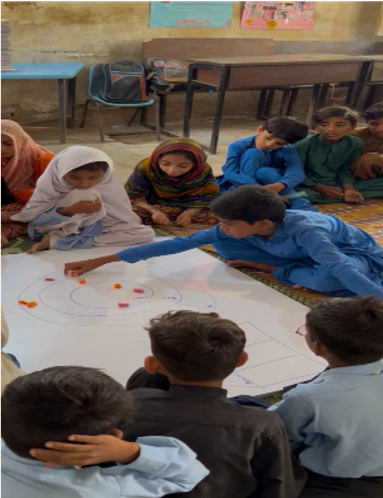
One of the more unexpected and instructive findings from the field came out of a school in Karachi West with a significant Pashto-speaking teacher and student population — part of the wider multi-ethnic, multilingual makeup that defines the district. On a school visit there, it was striking to see how naturally teachers and students alike used Pashto alongside Urdu and Sindhi to scaffold TaRL activities: explaining a grouping exercise in Pashto first, working through a maths concept with a Pashto-language analogy, letting children clarify confusion to each other in their first language before returning to the activity in Urdu.
Far from slowing learning down, this kind of translanguaging appeared to accelerate it. Children who might otherwise sit quietly through an Urdu-medium activity were instead actively explaining concepts to peers, asking questions, and engaging with the material — because the language barrier between understanding a concept and performing it in the language of instruction had been removed. This mirrors a broader pattern seen across Karachi West’s results: a historically multi-ethnic, multilingual district where Urdu is frequently a second or third language for both teachers and students, and where bilingual, mother-tongue-informed scaffolding appears to have helped accelerate gains rather than complicate them.
This is not a fringe observation — it points to something TaRL’s national rollout will need to actively design for rather than treat as an edge case. Pakistan’s own research on foundational learning has already flagged that students whose teachers use their mother tongue to explain lessons, even some of the time, consistently outperform those who don’t. International models echo this: structured mother-tongue bridging strategies, like those used in Senegal’s ARED-supported reading programmes, have shown similar results. As TaRL scales across Sindh — a province itself home to Sindhi, Urdu, Pashto, Balochi, Saraiki, Dhatki, and more — building structured mother-tongue scaffolding into teacher training and learning materials, rather than leaving it to individual teachers’ instinct, could be one of the highest-leverage refinements available to the model.
Why Umerkot matters most to this case?
Umerkot started from a weaker baseline, concentrated in the lowest learning bands, and still finished with a stronger combined Sentence-plus-Story reading share (64.8%) than Karachi West (59.7%), and stronger advanced numeracy (71.9% versus 68.5%). A rural, border, majority-Hindu district with chronic under-investment and limited infrastructure produced better catch-up gains than the urban comparison site. That is precisely the kind of evidence a scale-up case needs: proof that the model doesn’t depend on the advantages of a well-resourced setting to work.
Why it’s the right kind of intervention to scale?
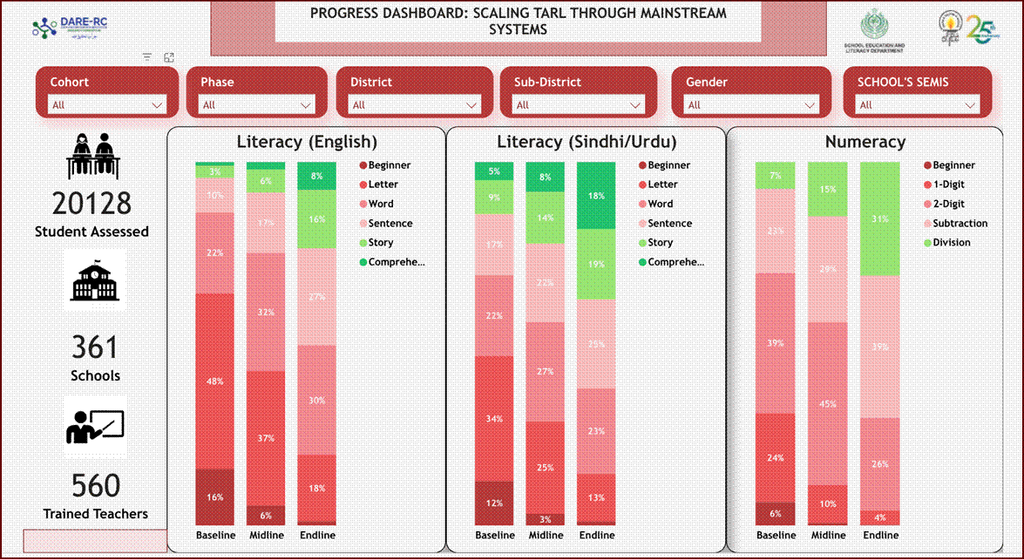
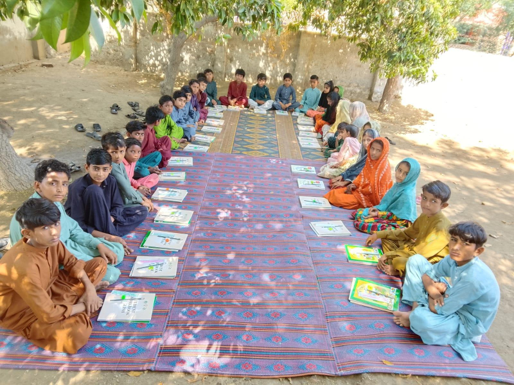
Image 1. Interactive dashboard showing outcomes disaggregated by gender, district and cohort.
Three features make TaRL unusually well-suited to government ownership rather than donor-dependent delivery:
It uses what already exists. No new staff, no new school buildings, no technology procurement. It runs through existing government teachers, inside the existing timetable, using low-cost, reproducible materials — a rare cost-to-impact ratio in foundational learning programming anywhere.
It strengthens the system rather than running alongside it. TaRL’’s teaching and learning resources have already been reviewed and endorsed by DCAR (July 2025) and the training manual approved by STEDA (November 2025). Master Trainers came through PITE-aligned training cycles. None of this lives outside government structures waiting to be “handed over” — it was built inside them from the start.
It has already cleared the political threshold scale-up usually stalls on. On January 6, 2026, the Secretary of SELD formally endorsed TaRL as the province’s foundational learning strategy in front of 35+ senior stakeholders, with development partners including the World Bank, JICA, and UNICEF committing continued support. By May 2026, SELD’s own Technical Working Committee on Foundational Learning had endorsed mainstreaming with a dedicated budget line. The usual bottleneck for proven pilots — government appetite — is not the obstacle here. It has already been cleared.
What scaling requires now?
The project’s own recommendations point to a clear, low-drama pathway: consolidate the tools, dashboards, and protocols built across 560 camps and four cohorts; expand to the districts with the weakest FLN outcomes, timed to start right after summer break; and mainstream TaRL into PITE pre-service training, DCAR/STEDA content cycles, and provincial SELD dashboards, so it becomes a standard feature of middle-primary instruction rather than a project with an end date.
None of this requires reinventing what already exists. It requires Sindh to fund, at provincial scale, a model that has now been tested across the spectrum of its hardest contexts — from Karachi’s dense urban slums to Umerkot’s desert margins — and has outperformed in both.
The window is now
ASER data shows foundational skills have been eroding nationally since 2019, with only a modest uptick in 2025. Every cohort that moves through Grade 3 without catching up becomes a child statistically unlikely to catch up later. Sindh now holds something genuinely uncommon in education policy: a government-endorsed, third-party-validated, dual-context-tested model, with the delivery infrastructure for it already standing. The evidence is no longer the question. What happens next is whether the system funds and institutionalizes what it has already proven works — or lets another cohort of children move through without it.
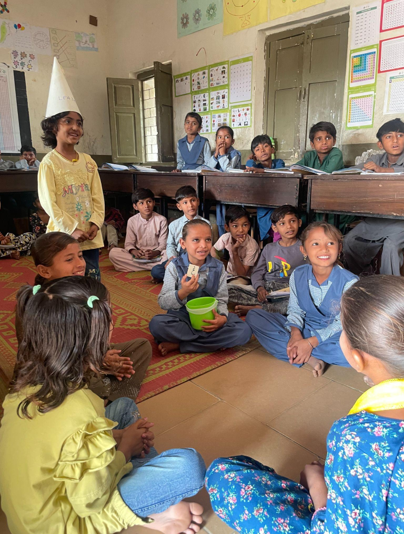
This is an experiential evidence based narrative of a rapid paced TARL/FL roll out by the system and within the system. Greater engagement with parents /communities and SMCs is critical as is that of provincial SELD/RSU STEDA/ PITE leadership to witness how TARL can be and should be part of school and classroom routines within strong district support systems to strengthen Foundational Learning as a right to education in Pakistan.
Note: the project has a detailed dashboard that is an accessible data point for each child with a unique ID and tracking system.
The Context
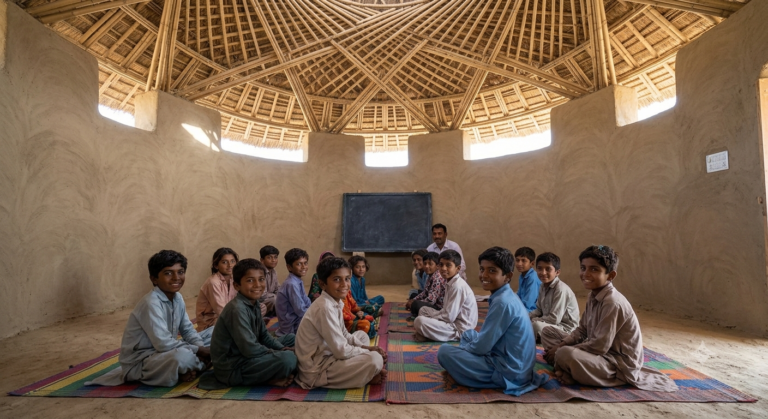
Two hundred kilometres east of Karachi, where the irrigated plains of the Indus give way to the dunes of the Thar, sits a district unlike any other in Pakistan. Umerkot is the only non-Muslim-majority district — 54.7% of its roughly 1.15 million residents are Hindu — and it shares a desert border with India. Sindhi is the mother tongue of more than 95% of the population (National Population Census, 2023), and the great majority live in rural areas, scattered across a landscape that has always demanded resilience from the people who call it home.
The chilli capital of Pakistan and the birthplace of the great Mughal Emperor Akbar, Umerkot, is also one of the most chronically under-resourced districts in Sindh. Decades of low investment in public services, a fragile agrarian economy, and recurring droughts have kept Umerkot near the bottom of the province’s human development indicators (UN-Habitat Pakistan, Country Report 2023). In recent years, climate change has sharpened those existing vulnerabilities rather than introducing new ones: Umerkot now sits among the districts most exposed to compounding climate shocks in Sindh, caught between worsening drought cycles and increasingly extreme heatwaves, with summer temperatures regularly pushing past dangerous thresholds. For families already living on thin margins, an extra month of failed rains or an early, brutal heat spell can be the difference between a child staying in school and a child going to work.
The TaRL Initiative
It is against this backdrop that the School Education & Literacy Department (SELD) has supported the action research initiative “Scaling TaRL Through Mainstream Systems” — alongside Karachi West, its densely populated urban counterpart, as part of the DARE Research Consortium programme. The goal was to test whether Teaching at the Right Level (TaRL), a pedagogy built around grouping children by learning level rather than grade or age, could be embedded into government schools at scale, under the Government of Sindh’s ownership.
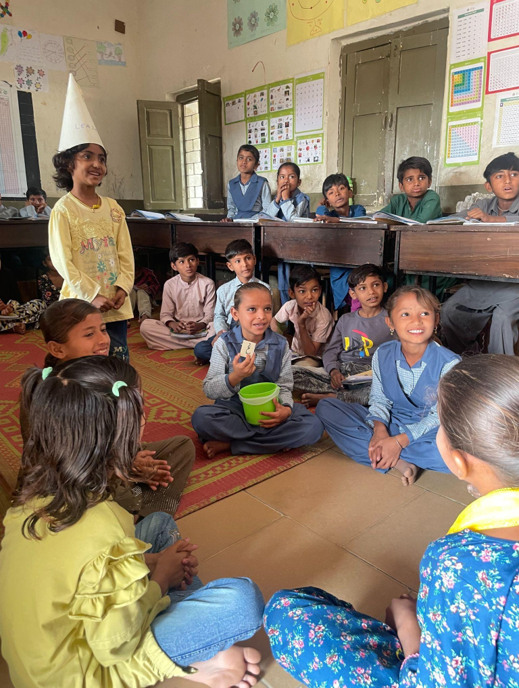
Over four rapid in-school cohorts, the project reached more than 20,000 students. The results, now consolidated under SELD, tell a clear story: in Urdu/Sindhi, the share of children stuck at the very beginning of the learning ladder (labelled as ‘Beginner Level’ where the child is not even at letter/alphabet identification stage) reduced — from 12.2% to 1.1% at the Beginner Level, while the share of children reading full stories more than doubled, climbing from 14.3% to 37.8%. This represents 7,606 students who could read stories by the end of the programme.
Numbers like these are, in the end, a story about thousands of individual children crossing a threshold from confusion to confidence. But the most vivid version of that story rarely lives in a dashboard. It lives in the children themselves.
Two Brothers, an Ancient Tradition
Among the children enrolled in Umerkot’s TaRL learning camps were two brothers, aged 13 and 11, from the Jogi community (one of South Asia’s oldest itinerant communities, with a presence across Sindh’s Tharparkar, Umerkot, Mirpurkhas, Badin, and Sanghar districts).
The Jogis are not a footnote to Sindh’s social fabric; they are one of its oldest threads. Many trace their spiritual lineage to the Nath Yogi order and to the worship of Lord Shiva, and for generations they have carried roles that blend the sacred with the practical: itinerant healers who use herbal and ritual knowledge to treat the sick, oral historians who preserve genealogies and folk epics that exist nowhere in writing, and poets who perform verse passed down through unbroken chains of memory rather than manuscript. Theirs is a semi-nomadic life by tradition and necessity — moving with the seasons, with labour opportunities, with the rhythms of a desert economy that has never offered much certainty.
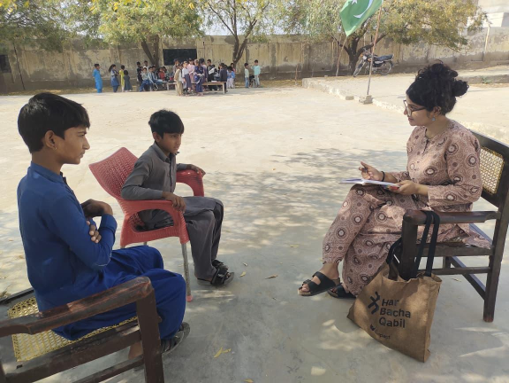
It is no accident that Umerkot’s soil has also produced some of Sindh’s most revered Sufi voices. The district is closely associated with Rohal Faqir and Murad Faqir, two poets whose verses are still recited and sung locally as part of the region’s living mystical tradition. In a place where poetry is not a pastime but a vessel for memory, faith, and survival, the Jogi brothers’ inherited gift for storytelling and verse feels less like an exception and more like a continuation of something deeply rooted in Umerkot’s identity.
For the Jogis, schooling has historically been a challenge for their nomadic caste known to be mystics, snake charmers and folk musicians. The brothers’ family moves every few months — and in the past, that constant displacement meant constant disruption: arriving at a new place, half-settling into a routine, only to leave before it could take hold. Interest in school, understandably, tended to fade.
What changed, they said, was the TaRL learning camp itself. Unlike a conventional classroom built around a rigid syllabus and grade level, the camp met them where they were — structured around play, storytelling and making, peer collaboration, and learning pitched to what each child could actually do, not what a textbook assumed they should already know. The brothers described it simply: it had become the highlight of their day. Not an obligation layered on top of an already hard life, but the part of it they most looked forward to.
They have a younger brother, just four years old, too young yet for school. At home, the two older boys recreate the games and activities from the learning camp with him — turning what they absorbed into something they can pass down, almost instinctively, the way oral traditions have always moved through their community: sibling to sibling, generation to generation. When asked what they would do when their family moves again in two months, neither boy spoke of loss. They spoke of carrying it with them — the games, the habits of learning, the confidence — the same way their community has always carried its stories, its healing knowledge, and its songs from one place to the next. Did TaRL, by design, have enabled this level of articulation through a pedagogy rooted in the principles of social and emotional learning (SEL)?
The older of the two, when asked what he wanted to become, didn’t hesitate.
He wants to be a doctor – a Yogi Doctor!
What Resilience Looks Like Up Close
It would be easy to tell Umerkot’s story only through the lens of what it lacks — investment, infrastructure, rainfall, stability. All of that is real, and none of it should be minimised.
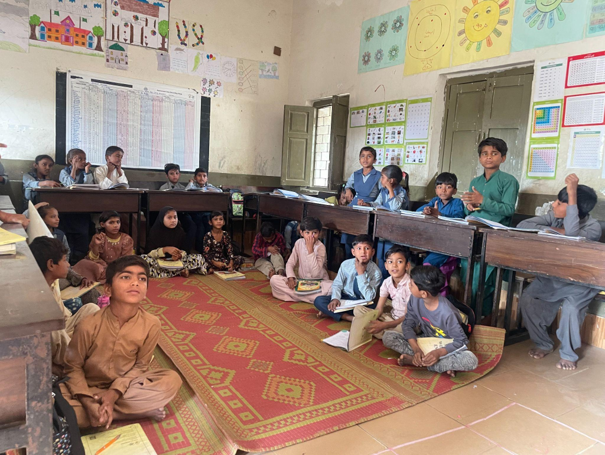
Yet the story of this district, and of this foundational learning initiative within a system, is also a story of what already exists over there in abundance: a centuries-old culture of healing and storytelling carried by communities like the Jogis. A literary heritage left behind by renowned poets, and now, a generation of children translating a few months of joyful learning into something they intend to keep — wherever the road takes them next. Behind this transformation were dedicated SELD teachers who believed and practiced the TaRL approach during regular school hours and classrooms, with measurable outcomes and made students learning-confident and happy.
Foundational learning, at its best, is not only about closing a literacy gap. It is about giving children like these two brothers something portable: a skill, a habit, a sense of what they are capable of, that survives the next move even when little else does.
Umerkot, located in the southeastern Sindh province of Pakistan, is geographically defined by a distinct divide between irrigated, fertile plains in its northern and western areas, and the arid, sweeping sand dunes of the Great Thar Desert in its southern and eastern regions.[1]
https://www.dawn.com/news/1926734
https://pide.org.pk/research/a-glance-at-socio-economic-realities-of-jogi-community
https://creid.ac/blog/2020/09/11/strangers-in-pakistan-jogi-community-denied-covid-relief/
https://sindhcourier.com/life-of-the-jogi-community/
[1] https://www.rspn.org/wp-content/uploads/2013/12/tahafuz-cause-study-kaplor.pdf
Imagine a classroom; a busy, dynamic space where learning happens. Now, imagine the education system—the massive machinery of the state—standing outside that classroom.
For decades, the system had to guess what was happening inside. That changed in 2021, when the School Education Department (SED) Punjab, digitised monitoring and Continuous Professional Development (CPD) for public schools. Paper-based monitoring and face-to-face trainings were replaced by a technology-enabled ecosystem. This included the rollout of the digital Classroom Observation Tool (COT) through mobile applications to provide real-time pedagogical feedback, and the Innovative Teachers’ Support Package (ITSP), a modular online Learning Management System (Hennessy et al., 2022).
By digitising classroom observations and teacher development, the public-school system across Punjab effectively installed windows to see into classrooms and doors through which support could be delivered. Yet, a critical problem has emerged: while the system can now look through those windows, it is rarely able to open the doors to help.
To understand this dynamic, a mixed-methods study conducted in 2025—Digital Evolution in Teacher Development: Analysis of Punjab’s Continuous Professional Development (CPD) System—examined the implementation of this blended CPD model. The research analysed administrative data from over 136,000 digital classroom observations recorded between 2021 and 2024 and incorporated qualitative fieldwork across four diverse districts: Lahore, Rawalpindi, Multan, and Muzaffargarh.
The research findings reveal a clear gap between policy intent and on-ground implementation. The infrastructure has been built (the windows and doors exist), but the flow of information is often one-way, burdensome, and disconnected from the realities of teaching and learning. Data flows efficiently upwards, involving collection at the school level and collation and presentation at the provincial secretariat. However, support and insights struggle to flow back down.
This disconnect divides teachers’ and mentors’ attention between meeting compliance-driven reporting needs and improving instructional practice. At the same time, the data systems themselves offer little targeted support for improving classroom practice (Aslam et al., 2022).
This blog explores this digital bottleneck. Drawing on the recent CPD research study, it maps the current information flows, highlights the successes of peer-to-peer collaboration, and proposes a way forward: connecting the observation window directly to the training door so as to translate data into meaningful action.
The Clerical Burden of Teachers and Mentors
Punjab’s education system operates through a vast hierarchy that stretches from the provincial secretariat down to individual teachers in classrooms. Policies and priorities are set by the School Education Department (SED) and passed down to the District Education Authority (DEA). Within districts, Chief Executive Officers (CEOs), District Education Officers (DEOs), and Deputy District Education Officers (DDEOs) manage implementation, while Assistant Education Officers (AEOs) work directly with schools by mentoring teachers and reporting school-level information upwards.
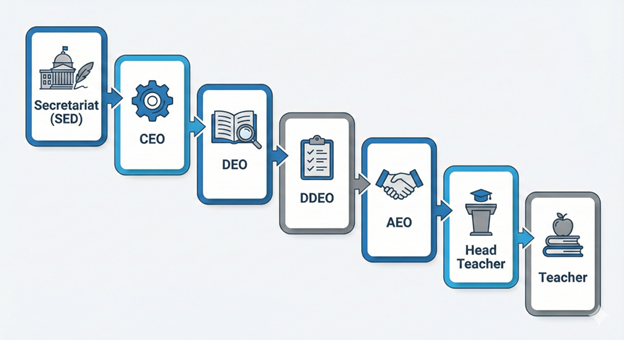
Figure 1: SED Punjab Hierarchy
Ideally, information flows smoothly both upward and downward through this system to facilitate policy, planning, and classroom practice. Digitisation efforts were intended to make this easier. The automation of AEO observations through the COT App and the introduction of online, on-demand professional development were designed to further enhance the flow of data across the system. However, in reality, digitisation, has often increased pressure without reducing workload. While it has created an efficient channel for sending data upwards for monitoring, it has not yet created a strong feedback loop that uses data to provide timely and relevant support where it is needed most (Crouch & DeStefano, 2017).
Research participants described a Downward Flow characterised by directives and immediate demands. One participant noted, “The information required by the Secretariat has to be provided immediately.” This urgency to respond quickly often compromises accuracy of information.
As a result, data collection is often perceived more as a burden than as a useful tool for informed decision-making. Many teachers and Assistant Education Officers feel they are engaged in clerical work rather than educational leadership. When the focus is entirely on uploading photos, ticking boxes, and syncing apps, the actual goal of improving classroom instruction is lost. The data becomes a compliance metric, not a window into student learning.
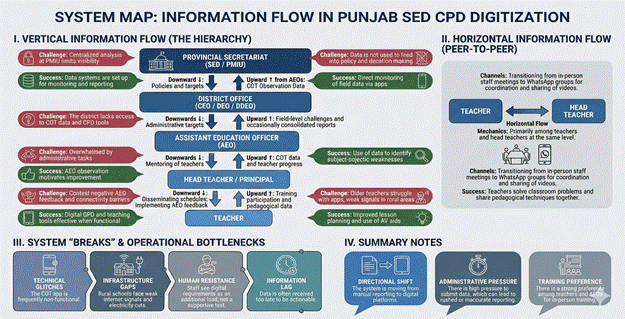
Figure 2 (below) illustrates these flows. It highlights the tension between the formal vertical hierarchy (downward and upward flows) and the informal support networks (horizontal flow) that teachers rely on. While the vertical channels often carry directives downward and data upward, the horizontal channels represent peer collaboration among teachers to navigate these demands.
Figure 2: The System Map illustrates the complex web of information flow highlighted in the research findings.
The Data Silo Problem
Perhaps, one of the most significant challenges identified is the upward flow of data, which often disappears into a black hole. Data is collected digitally from the field, including classroom observations, attendance records, and training completion, and is automatically sent to the central database at the Programme Monitoring and Implementation Unit (PMIU). However, this data rarely flows back in usable form to the people who collect it, despite recent efforts to develop multi-tiered data dashboards for district officials (Mugo et al., 2022).
District officers (DEOs and DDEOs) reported limited visibility into the very data their teams collected. As one respondent highlighted, “District leadership gets COT scores only in presentations.” They cannot verify this information in real-time or use it to make quick, local decisions.
This creates a paradox: the system is data-rich, but information-poor. Millions of data points exist, but synthesising them into actionable evidence for decision-making, especially at the district and tehsil levels, remains a struggle.
The Missing Link: From Observation to Action
Currently, there is a risk that the data collected through the COT window is merely recorded, stored, and forgotten, or it is used solely for punitive monitoring (Jamal et al., 2024). This suggests a missed opportunity. Observation data could instead be used to inform, refine, and strengthen the support provided through the CPD channel.
Rather than relying on a one-size-fits-all training approach, the system has the potential to use observation data to customise professional development to specific needs. For example, if COT data reveals that a teacher is struggling with student engagement, or that a school demonstrates weak performance in science instruction, CPD support could be automatically adjusted to meet those needs.
Data should not just function as a report card; it should be a prescription. By linking the observation tool directly to training modules, the system can move from generic professional development to more targeted and responsive support at the level of schools and individual teachers (Adoho & Blimpo, 2021).
Opening the Door for Support: Success Stories
Despite these challenges, the research highlights several areas where the system is working effectively. When the focus shifts from policing teachers through the window to supporting them through the door, the digital tools shine.
1. The Power of Horizontal Flow-Peer Collaboration
While vertical communication within the system is often constrained by top-down directives, horizontal collaboration among teachers is emerging as a strength. Teachers are using informal digital channels, such as WhatsApp groups, to discuss instructional challenges and share solutions. One teacher noted “If there is a problem in class, our entire staff sits together and solves it.” This peer collaboration is a success story. It shows that when teachers have access to data and own the communication, they actively use these channels to drive improvement.
2. Immediate Feedback Loops
When digital tools are effectively implemented in the classroom, they can transform the relationship between the AEO and the teacher. The research found that timely feedback from the Classroom Observation Tool (COT) can be a powerful motivator. Instead of waiting months for a paper report to be generated, teachers can review observation feedback instantly. This transparency ensures that the window is not just for surveillance but a tool that encourages reflective practice, constructive dialogue and continuous improvement among teachers.
3. The Organic Demand for Data
Perhaps the most encouraging finding is the growing appetite for on-demand data among district level officials. Staff involved in implementation is not rejecting data; rather, they are seeking greater access to it. Instead of using data merely to meet reporting requirements. they want to track their own performance metrics and use them to improve practice. As one participant emphasised, “We should be able to see data directly, rather than wait for consolidated reports,”
Conclusion: From Monitoring to Mentoring
The digitisation of education in Punjab has successfully built the infrastructure. The windows of observation and the doors of development are now in place. The challenge is how these tools are utilised.
If observation systems such as the COT window are used only for upward reporting to monitor and demand data from teachers and AEOs risk being burdened with data entry. However, if the CPD door is used to pass meaningful evidence and insights back to the classrooms, to facilitate peer collaboration, reflection, and provide targeted actionable support, the system has the potential to be genuinely transformed.
The evidence is available. The infrastructure already exists. The next step is to ensure that the information flowing across the system does not only travel upwards to a dashboard but also flows back to the classroom, where it matters the most.
Acknowledgement: The authors would like to thank Dr. Irfan Muzaffar for his analogy of the system entering the classroom through five doors, presented at the DARE–RC Summit 2025.
References
Adoho, F., & Blimpo, M. P. (2021). Improving education outcomes through data use: Evidence from Sub-Saharan Africa. World Development, 145, 105527.
Aslam, M., Rawal, S., & Kingdon, G. G. (2022). Systemic barriers to using education data for decision-making in Pakistan. Compare: A Journal of Comparative and International Education, 52(7), 1094–1111.
Crouch, L., & DeStefano, J. (2017). Doing reform differently: Combining rigor and practicality in system reform. RTI Press.
Hennessy, S., D’Angelo, S., McIntyre, N., Koomar, S., Kreimeia, A., Cao, L., Brugha, M., & Zubairi, A. (2022). Technology Use for Teacher Professional Development in Low- and Middle-Income Countries: A systematic review. Computers and Education Open, 3, 100080.
Jamal, N., Gull, K., Khan, M. T., Ahmad, Z., & Khan, M. A. (2024). Systematic Barriers to Effective School Monitoring In Pakistan: The Perspective of Assistant Education Officers (AEOs). Migration Letters, 21(S10), 1379–1390. Mugo, J., Orodho, J. A., & Nampota, D. (2022). From data to decisions: Educational management information systems and teacher professional development in East Africa. Educational Management Administration & Leadership, 50(5), 801–820.
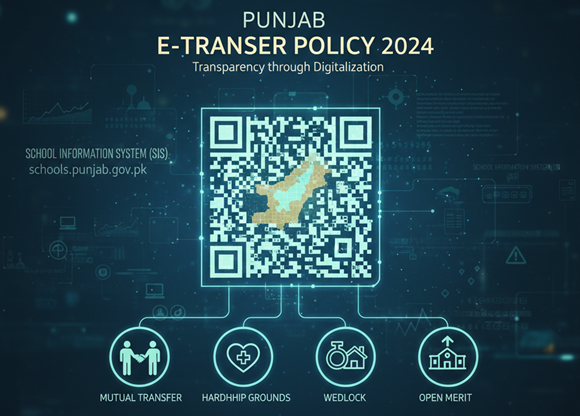
Punjab e-transfer policy core categories
The e-Transfer policy
As the new school year starts in Pakistan’s Punjab province, we are reminded of teachers’ paramount role in imparting high-quality education and in creating an environment conducive to learning. Any teacher-related policy reform therefore offers an opportunity to improve the persistent low educational achievements of the majority of children in Pakistan.
The Punjab teacher e-Transfer policy introduced an online application system in 2019 to make teacher transfers transparent and merit-oriented as compared to the earlier less efficient paper-based system. By applying clear rules and criteria for relocation, the policy aims to balance teachers’ needs with system requirements contributing to better learning outcomes.
The e-Transfer study
Our study analyses administrative data on transfers that took place over a period of five years (2019-2024) and conducts interviews with teachers, head teachers and district officials to assess the impact of the e-Transfer policy on teacher satisfaction, imbalances in regional teacher distribution and school outcomes. Preliminary results from interviews indicate that teachers face lower transaction costs for transferring under the new policy. Teachers and administrators appreciate the efficiency of digital technology and the greater transparency in teacher placement decisions.
Figure 1 – Reproduced from Michie et al, 2011
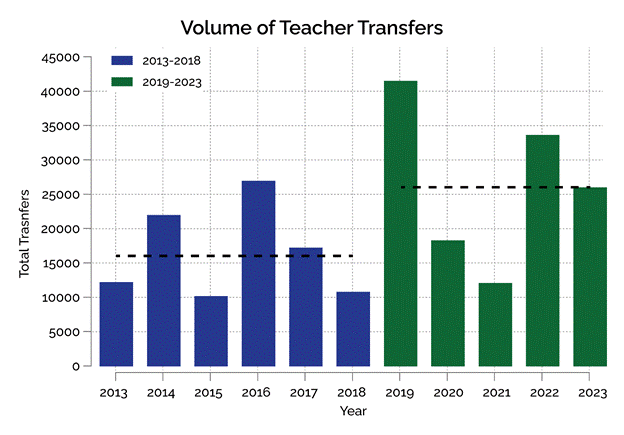
Source: Annual School Census, 2013-2023
The overall volume of teacher transfers has increased after 2019 due to the reduced transaction costs of applying. In addition, transfer data shows large movements of teachers from rural and primary to urban and high schools, and a district official said that there may have been a movement of teachers from “needy to surplus schools”. A head teacher in an urban high school described the disruption caused when teachers announce their intention to transfer while school is in session rather than during summer break. Despite many positive features, an inadvertent negative consequence of the policy may be that rural students, especially in primary schools incur greater academic losses than their urban counterparts if too many teachers transfer out of rural schools. Management systems continue to prioritise seniority for transfers and this may be a reason for the worsening equity outcomes.
Figure 2 – More female than male teachers participated in the e-Transfer system
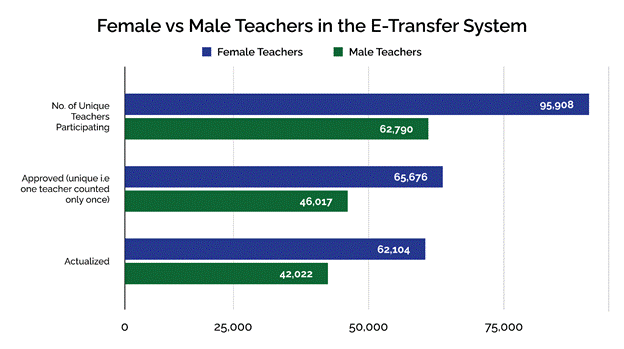
Source: e-Transfer data, 2019-2024
Interviews with head teachers, teachers and government officials suggested that greater transparency and ease of application under the new e-Transfer policy especially allowed female teachers greater access to preferred transfer options, unlike the earlier system that required connections, incurring expenses for required paperwork and greater mobility to travel to central government offices, all of which were relatively more difficult for female teachers. One teacher mentioned that she “joined the school easily with the QR code” upon receiving the transfer. Another teacher expressed her satisfaction with the online application process and the automatic generation of transfer orders and that she could “get all of this done while sitting at home”.
A female district official mentioned how the “wedlock category under e-Transfer presented a convenient way for female teachers to apply online to move to preferred locations to join their spouses”.
Figure 3 – Rural primary schools are most likely to be adversely impacted from teacher transfers
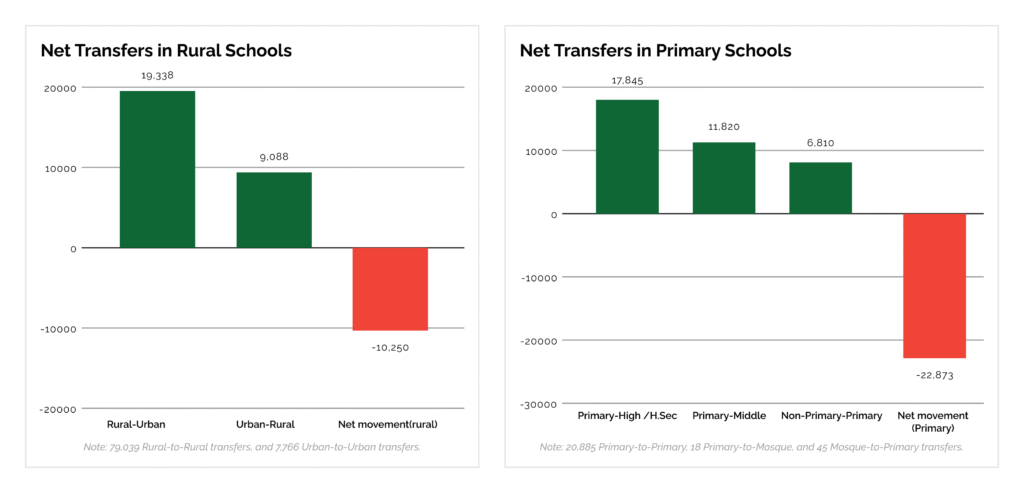
Note: Of the 22,873 teachers that move out of primary schools, roughly half (10,841) move due to promotion.
Despite the e-Transfer policy rule of teachers not being allowed to move out of schools with two or less teachers, a significant movement of teachers took place from rural to urban schools, and from primary to high schools. A district official felt, “the reason for teachers moving from rural primary schools is that the workload is greater there, with fewer teachers, at most 2-3 and up to 6 classes; while in a high school, there are more teachers and less monitoring by education officers.”
While teachers transferring out is problematic, a headmaster in rural central Punjab also noted that, “the incoming teachers may turn out to be a better fit; therefore, it is hard to predict if rural schools are better or worse off from this trend.”
The problem, however, is that new teachers are slow to join rural schools and prefer transferring to cities. According to a district officer, “The teacher is satisfied. The drawback is, obviously, to the department. Teachers mostly move to the urban areas, the rural areas become deprived, and the department does not have any immediate hiring option – those schools suffer, and the children suffer.” One special education teacher mentioned that, “she felt adverse leaving her students without a relevant replacement after moving out of a rural school, and how the students’ mothers still reach out to her.” Additionally, teachers, head teachers, assistant education officers and deputy district education officers mentioned how some schools with insufficient teachers are being handed over to the Punjab Education Foundation or “PEF” after too many teachers transferred out, creating a shortage of subject teachers. Parents tend to take their children out of school if too many teachers transfer out.
Teacher movement to avail promotion opportunities shows a small net gain for rural schools
About half of the teachers moving out of primary schools are due to promotions representing a net gain for rural schools. Teachers must avail promotion within a year otherwise they lose the opportunity. An interviewee mentioned, “if teachers can’t get adjusted, their promotion may lapse. And the one who has been promoted wants to take up the next scale right away, and have the permission to move, and they should.” During visits to rural schools, the research team met at least two teachers who had moved only to get their promotions, and their intention was to transfer back to an urban area as soon as an appropriate post opened in the next transfer round.
It takes a long time to replace teachers transferred from rural primary schools
Interviews revealed that teachers often left during the school year and that there was no automatic system to fill posts left vacant by transferred teachers. Data shows the number of months a post remains vacant after transfer, and interviews also shed light on how schools avoid disrupting students’ learning progress in the classroom. Preliminary results indicate that it can take up to 16 months for primary teachers to be replaced in a school where a teacher has transferred out. Rural primary schools may be left without sufficient teachers for extended time periods (of up to a year on average for both male and female schools), signifying substantial learning losses for students.
Measures taken by schools when teachers transfer out without timely replacements
Interviews with teachers, head teachers and district officials revealed that when transferred teachers are not replaced quickly, students tend to drop out, or schools with transferred-out teachers may be turned over to joint partnerships with private or non-governmental organizations such as “PEF” (Punjab Education Foundation Schools). To counter this trend of school closures, some schools recruited teacher interns under the School Teacher Internship Program (STIP) though an urban area district officer expressed dissatisfaction with the short-term nature of the appointments. Several head teachers mentioned informal hiring of local teachers at low stipends as a stopgap measure, mostly funded by head teachers’ and teachers’ personal contributions. Discretionary school budgets were usually insufficient for hiring local teachers.
Conclusion

The Punjab e-Transfer reform successfully moved thousands of teachers to their preferred locations and posts. Teachers and education officials expressed satisfaction with the modernized online transfer system for creating convenience, access and transparency in relocating teachers, especially female teachers. However, the e-Transfer policy needs to address the trade-off between retaining good teachers in rural schools versus maintaining high teacher satisfaction and welfare levels, as both factors affect students’ academic progress. Preliminary analysis of transfer data and interviews with teachers, head teachers and district officials show that transferred teachers’ positions are not filled for over a year on average, indicating substantial learning losses for students. These delays in replacing teachers remains a major challenge, sometimes resulting in school closures.
The e-Transfer system’s efficiency may have created an unmanaged “marketplace” that inadvertently accelerated teacher movement, hollowing out the already disadvantaged schools in the system. The challenge now is to combine the efficiency of going digital with developing policy to better define eligibility and merit for transfer, and to evolve the policy’s logic from a simple automation tool into a sophisticated workforce management system that is outcome focused. By strategically refining the rules of the system, we can steer this powerful engine to not only transfer teachers efficiently, but to effectively place our best teachers where they can make the greatest difference.
Authors: Dr. Masooma Habib: Fellow, Consortium for Development Policy Research (CDPR), Dr. Farooq Naseer: Assistant Professor, Department of Economics, Lahore University of Management Sciences, Lahore (LUMS), Dr. Yasira Waqar: Acting Dean, School of Social Sciences and Humanities, University of Management and Technology, (UMT) Lahore, Ayesha Irfan (Research Associate-DARE RC Study), and Omar Zahid (Research Associate-DARE RC Study)
Quality Assurance: Dr. Sahar Shah (DARE-RC Senior Research Manager)
References
Anzia, Sarah F., and Terry M. Moe. “Collective bargaining, transfer rights, and disadvantaged schools.” Educational Evaluation and Policy Analysis 36.1 (2014): 83-111.
ASER Pakistan. Annual Status of Education Report (ASER) Pakistan 2023: National (Rural). Idara-e-Taleem-o-Aagahi, 2024, https://aserpakistan.org/document/2024/aser_national_2023.pdf.
Bari, Faisal, et al. “An investigation into teacher recruitment and retention in Punjab.” Institute of Development and Economic Alternatives (IDEAS) (2015).
Beg, Sabrin, et al. “Engaging teachers with technology increased achievement, bypassing teachers did not.” American Economic Journal: Economic Policy 14.2 (2022): 61-90.
Programme Monitoring & Implementation Unit. Annual School Census Dataset (2013-2024).
Punjab Education Foundation. (2023). https://www.pef.edu.pk/Home/.
Punjab Information Technology Board (PITB). e-Transfer Dataset (2019-2024).
School Education Department, Government of Punjab. E-Transfer Policy. Punjab Schools (2024). STI Jobs. “STIs Portal Punjab School Teacher Interns 2025.” STI Jobs, Stijobs.pk, 24 Jan. 2025, https://stijobs.pk/stis-portal-punjab/
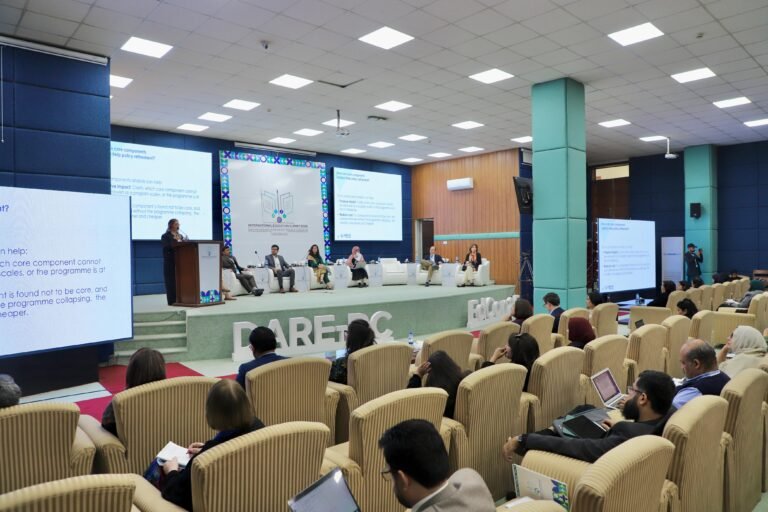
DARE-RC International Education Summit 2025
The International Education Summit in Islamabad, Pakistan (December 17-18, 2025) organized by DARE-RC brought together researchers, practitioners, and policymakers to share insights from projects aimed at improving access and learning outcomes for children across Pakistan. Grounded in evidence-based practice, presentations explored building resilient education systems, strengthening teaching quality and governance, and addressing the intersecting forms of exclusion that prevent children from reaching their educational potential. Our project contributed initial findings on scaling Teaching at the Right Level (TaRL) in Pakistan’s Sindh province, which aligns with broader evidence on implementing effective practices at scale.
TaRL is a proven pedagogical approach that groups children by learning level rather than grade, providing targeted support through relevant materials and activities. Evidence from Pakistan demonstrates TaRL’s effectiveness in building foundational learning and life skills, particularly for out-of-school children and those who have reached primary grade 2 without mastering basic competencies. Beyond its effectiveness in remedial learning, the approach is also cost-effective. However, questions remain about whether provincial governments can scale TaRL successfully. Our DARE RC-funded project examines how the Government of Sindh is adopting, adapting, and implementing the TaRL intervention developed by Idara-e-Taleem-o-Aagahi (ITA), with specific focus on the enablers and barriers to scaling the approach across all government schools in the province.
In this blog, I reflect on a question central to our project: what does the evidence presented at the DARE-RC Summit 2025 reveal about TaRL’s potential to improve equitable learning at scale? I draw primarily on insights from scholars, practitioners, and policymakers, as well as notes from the presentations I attended. In the following section, I outline key aspects of our project alongside findings from other presentations that inform our understanding of scaling TaRL equitably.
Reflections on System-Level Processes
Preliminary findings from our project using key informant interviews with stakeholders from the School Education & Literacy Department (SELD), Government of Sindh, show that:
- TaRL approach is perceived to be embedded within foundational learning targets and policy focus on Early Childhood Education in Sindh.
- TaRL has demonstrated improvements on student foundational learning through remedial camps, particularly led by ITA.
- Teachers and headteachers trained in the approach have provided positive feedback.
- SELD shows strong political commitment to scaling the approach, especially through curriculum adaptations that enable differentiated learning levels in literacy (local language, Urdu, and English) and numeracy.
This final point is central, as it highlights the strong commitment, willingness, and partnership essential for policy uptake. At the Education Summit, we had the opportunity to discuss our project with Dr. Fouzia Khan, Chief Executive Advisor of Sindh’s School Education & Literacy Department, and we continue to benefit from her guidance and insights. We discussed key challenges stakeholders have identified in adapting TaRL, including aligning TaRL content design with the Government of Sindh’s established formats and procedures, and ensuring ongoing support from teachers and headteachers so the approach can be implemented effectively within existing school timetables and requirements.
The Education Summit yielded important lessons about the political economy of educational reform in Pakistan. Rafiullah Kakar’s presentation highlighted variations in state capacity to deliver services and the significant differences in learning outcomes between schools across districts. His research unpacked how power distribution within political settlements affects outcomes, even when resources are distributed equally. Dr. Farah Nadeem’s research on the digitalization of teacher professional development illuminated the gap between training and practice—specifically, the disconnect between teacher training content and the realities of multigrade, multilingual classrooms. This raised a key question for our project: would TaRL training face similar implementation challenges? Dr. Yasira Waqar’s presentation examined how technology can improve transparency and efficiency in teacher distribution while simultaneously creating unexpected shortages in remote rural and under-resourced schools. Given these provincial and regional variations, we must continue examining how teacher mobility is likely to impact TaRL’s effective implementation over time in Sindh.
Reflections about Exclusion and Equity
Sitting in the classroom and not being able to understand the lesson is a marker of exclusion. For our project, we collected learning assessment and sociodemographic data from 879 students in 57 schools in order to capture learning disparities for children in upper grades of primary school. Selected schools had teachers who were trained in the TaRL pedagogy and were committed to implement the remedial pedagogy as part of their regular practice for 60 days after training. Students and schools were selected from Karachi West (429 students in 29 schools) and Umerkot (449 students from 28 schools).
As discussed during the Education Summit, we were interested in using data that is relevant to the context in which we work. This means data that is meaningful for practitioners and policymakers. In terms of learning assessment data, we used the ASER Pakistan tool, with a small adaptation. Selected children were asked to complete the ASER tool from the start, from the most basic foundational skills such as being able to identify letters and numbers, to the highest level, reading a paragraph or successfully performing subtractions and divisions.
Figure 1 shows some of the inequalities in foundational numeracy. Among the key indicators of inequalities, we included learning in a language that is different to the one spoken at home, household wealth, gender and location. Results show that children who are learning in a language which is similar to the one spoken at home achieve higher scores in numeracy. For wealth, we did not find significant differences among those who live in relatively richer households, however for gender we found that boys outperform girls. Finally, children living in Umerkot underperformed relative to children living in Karachi West.
Figure 1: Predictors of Foundational Numeracy
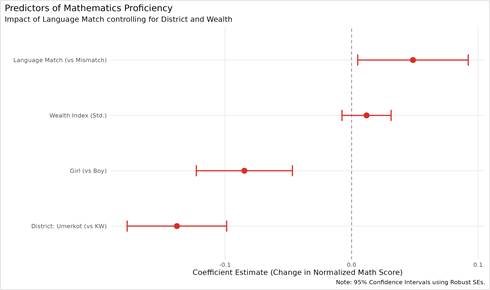
Source: Numeracy Data from the ASER Tool
Dr. Nishat Riaz’s presentation offered a powerful reminder: exclusion is not born, it is built. Exclusion operates systematically—through factors like language of instruction—meaning scalable innovations must address root causes. For our project, this means focusing not only on existing regional disparities in learning, but critically on multiple intersecting dimensions such as language, disability, and gender. Dr. Riaz challenged researchers, practitioners, and policymakers to engage with existing data through diverse epistemic lenses and, as Dr. Rabea Malik emphasized, with the diagnostic capacity needed to build resilient systems. Pakistan’s education system generates substantial data, yet it remains difficult to access and therefore underutilized. As Dr. Laraib Niaz’s review explored, this underutilization prevents educational researchers in Pakistan from examining data that could inform policy-relevant questions and build system resilience.
Several presenters at the Education Summit highlighted how climate change is likely to amplify educational exclusion. Dr. Hadia Majid examined climate change’s impact on schools through flooding and exposure to hazards including heat, droughts, and poor air quality. Her research focused on mitigation strategies by schools, households, and district governments to provide greater protection as these risks intensify. Dr. Sapana Basnet’s research explored what resilient education means for adolescents with disabilities, particularly as human-made disasters like waste pollution disproportionately impact their health and wellbeing through waterborne diseases. Dr. Saher Asad used existing data to demonstrate how air pollution exposure affects cognitive ability, as measured by lower test scores. For our project, these findings are particularly relevant: TaRL will likely be scaled in crisis-affected areas. Embedding remedial practices into teaching from the outset may help mitigate some of the impacts identified by researchers at the Summit.
Reflections on Teachers and Practice
As I reflect on the important role of teachers, I would like to conclude with 5 key areas which are central to pedagogical practice, and which many of the DARE-RC funded projects are examining as part of their research:
- Pedagogy is institutionalized. Pedagogical approaches operate within the normative and material conditions of classrooms. They are therefore inseparable from teachers’ professional identities and must be examined within the actual conditions of teaching and learning, as demonstrated by Dr. Sadia Bhutta’s research on science and mathematics instruction.
- Pedagogy is interpersonal. It is grounded in relationships among all stakeholders—not only teachers and learners, but also leaders, inspectors, and parents. Dr. Zahra Mansoor’s research on parental engagement illuminates the barriers parents face in supporting their children’s education.
- Pedagogy must be understood socio-culturally and politically. Teaching practice occurs within specific historical moments and carries ideology, language, and traditions. It must be understood within its political economy and adapted to diverse sociocultural contexts, as reflected in Dr. Camilla Chaudhary’s research on school cultures and leadership, which examines how school leaders can enable transformative teaching practices.
- Pedagogy should be theory-driven. Pedagogy provides the framework that orients and facilitates interactions, helping learners construct knowledge, develop understanding, build values, and engage in social interactions. Dr. Irfan Muzaffar offered insightful reflections on classroom realities and system possibilities in his session (see Figure 2).
- Pedagogy is intrapersonal. Teachers bring their own values, beliefs, and worldviews to the teaching and learning process. This personal dimension is central to understanding how teachers interpret curriculum and assessment, as discussed by Dr. Aliya Khalid.
Figure 2: The System Entering the Classroom Through 5 Doors
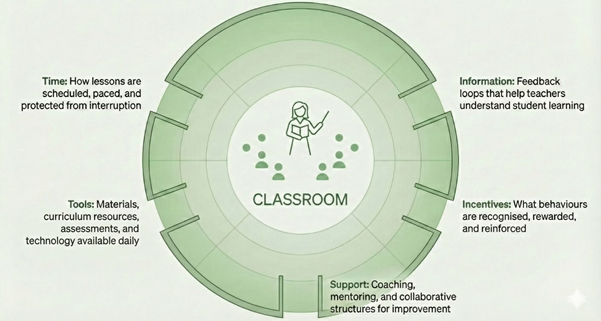
Source: Presentation by Professor Irfan Muzaffar (DARE-RC Education Summit 2025)
As we move into the next stage of our project on TaRL’s scalability in Sindh, we will draw on many lessons from the Education Summit, particularly as we engage with teachers and their adoption of this pedagogical approach. Importantly, we remain active participants in DARE-RC’s communities of practice, sharing knowledge and ensuring our research contributes to a collective approach rather than an isolated project. This collaborative engagement should strengthen how policy is informed by evidence from multiple perspectives while maintaining coherence across policy, regulation, and service delivery.
Quality Assurance: Dr. Sahar Shah (DARE-RC Senior Research Manager)
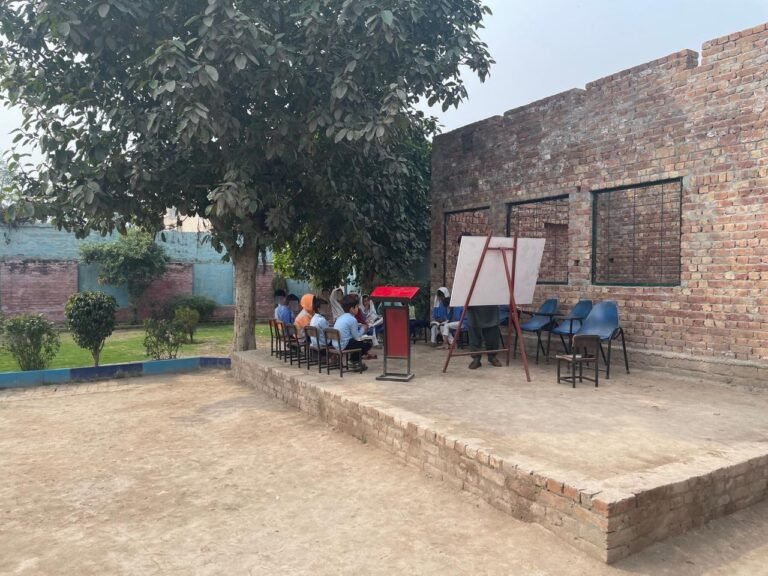
Government Primary School, Chiniot
What if boosting school attendance was as simple as sending a text? Or if improving student performance required simply sending a friendly reminder about an upcoming test? Thanks to behavioural science insights, short, well-timed nudges have been remarkably effective in addressing education related problems from South Africa to Chicago.
Behavioural science, which explores why people act the way they do, shows us that tiny changes – e.g. in how information and choices are presented can lead to big improvements. Rather than focusing only on building new schools or buying technology, behavioural science digs deeper into everyday habits, motivations, and mental shortcuts that shape how students, parents, teachers and school administrators behave.
In education, this means creating smart interventions that boost engagement, support learning, and encourage positive habits both inside and outside the classroom. In this blog, we look into how behavioural science is transforming education across the globe, and what it could mean for developing countries like Pakistan, where education systems face serious barriers but also hold enormous potential.
Behavioural Science Frameworks: Why They Matter
Behavioural science interventions work because they target the small psychological factors that shape how people act. Instead of relying on guesswork, we use structured ways to identify what really drives or stops a behaviour.
One useful framework, known as the COM-B model, explores a person’s capability and opportunity to perform an action, and the motivation to follow through, when determining how that behaviour can be influenced.
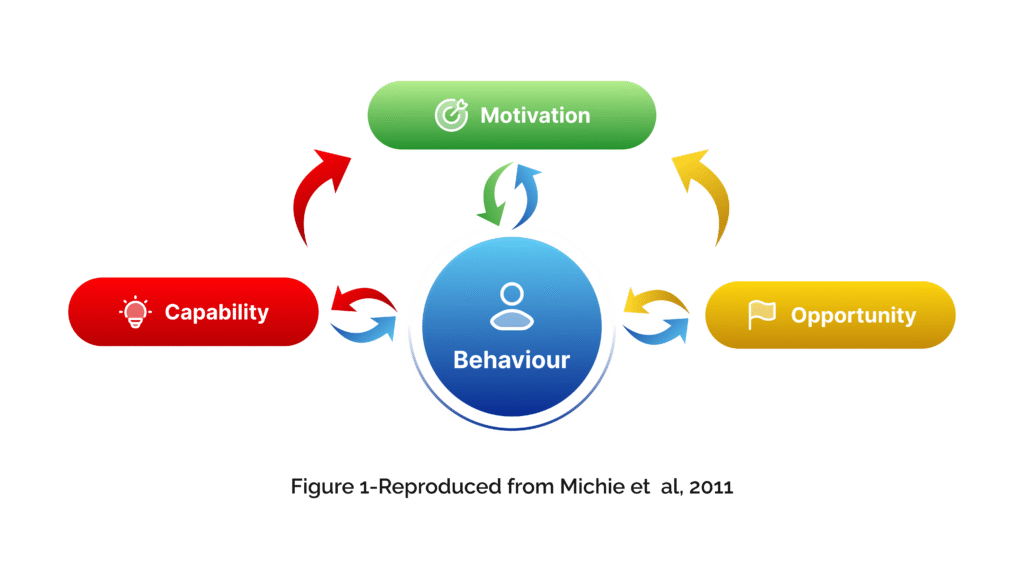
For instance, a parent may want her child to make positive food choices, but a simple reminder, like a short text message, can help the child select a healthier option for school lunch. Behavioural science approaches, such as designing small nudges or using positive social cues, follow the same principle: small changes in the way choices are presented can lead to better choices being selected. By diagnosing behavioural barriers via such frameworks, designers ensure interventions tackle specific limitations instead of relying on guesswork.
Motivating Students
Sometimes it’s not about how much you reward effort, but when and how you do it. A fascinating experiment in Chicago Public Schools tested whether behavioural science could help students perform better in exams. Students were given a monetary reward before the test, with one condition: it would be taken away if they underperformed. This small change in framing made all the difference. Those who faced a possible loss improved their scores by 0.12 to 0.22 standard deviations compared to students who were promised the same reward later. The takeaway is that timing and framing matter more than the size of the incentive. Immediate conditional rewards use present bias and loss aversion to motivate students who might otherwise struggle to stay focused on long term goals.
These insights are not limited to students. In many low resource classrooms, teacher motivation plays an equally critical role. Studies show that recognising teachers for effort and purpose, rather than simply offering financial incentives, can shift attitudes, reduce absenteeism, and improve student outcomes. Small and timely feedback loops build meaning and accountability, helping teachers reconnect with why they teach.
Enhancing Parent Involvement
A gentle reminder can go a long way. In South Africa’s Western Cape, local authorities tested a simple idea: sending parents short, personalised messages when their child failed to show up at an after-school centre. The messages were friendly and non-punitive, no fines, no warnings, just a prompt that said, “Your child was absent today.” Attendance rose by 39%. The power was not in technology but in empathy.
The messages made parents feel seen and involved, turning awareness into action.
In Malawi, Dizon Ross (2019) found that when parents were clearly told how their children were performing through simple, verbal explanations, they updated their beliefs and directed time and money more effectively. Parents who understood where their children stood academically became more strategic and supportive at home.
In the United States, Bergman (2016) showed how regular text updates can transform parental engagement. Parents received weekly SMS messages about missed assignments, attendance, and grades. With this timely information, course failures dropped by 28% and attendance improved. The messages did not reveal anything new – they just made important details more visible and actionable. For many busy parents, this was the difference between being disconnected and being empowered.
Castleman and Page (2015) found similar results in early education. Their pre-kindergarten text campaign sent parents small, actionable prompts like “Read one letter in your child’s name tonight.” These micro reminders improved literacy interactions and produced learning gains equal to two or three extra months of schooling. Later, Bergman et all. (2019) showed that parents who received regular updates about missed work and low GPAs were more engaged not only with attendance but also with school meetings and follow ups. Across both studies, the insight was simple, timely and clear communication helps parents take small steps that add up to big changes.
Aligning Teachers and Parents
While parent focused nudges often work well on their own, they become even more powerful when teachers are part of the loop. UNICEF lessons from Côte d’Ivoire found that messages sent only to parents boosted attendance, but adding teacher reminders created an extra effect. This suggests that student learning thrives most when parents and teachers act together, reinforcing each other’s roles rather than working in isolation.
Taken together, these examples show that behavioural science is not about expensive technology or sweeping reforms. It is about understanding how people think and feel and designing interventions that fit that reality. Small, timely, and empathetic actions can create meaningful shifts in behaviour, helping students learn better, parents stay engaged, and teachers stay inspired.
How could this play out in Pakistan?
In South Asia, behavioural science is quietly shaping the way we think about change. From health to education, organisations are beginning to realise that information alone is not enough. How we deliver it, and when, matters just as much.
UNICEF, for instance, has started introducing workshops across the region to help teams use behavioural insights in their programmes, aiming to improve outcomes in health, education, and nutrition. These efforts focus on understanding how social norms and gentle nudges can help people make better decisions in their everyday lives.
To date, many of application of behavioural science interventions in South Asia have focused on public health. In Sri Lanka, Olupeliyawa et al. (2008) explored how behavioural science could be integrated into medical education, showing how appropriate nudges could enhance communication skills and professionalism among future doctors. In India, a similar 2013 study highlighted the role of behavioural science in helping medical students understand social determinants of health and build empathy with patients. These examples show how behaviour-focused thinking can humanise systems that often rely only on technical fixes.
In Pakistan, applying behavioural science to education is still new but promising. A recent FCDO funded campaign, Aaj Kiya Seekha, used a behavioural framework to encourage parents to engage more actively in their children’s learning at home. The Learning and Educational Achievement in Pakistan Schools (LEAPS) project has also tested simple, low -cost interventions like report cards and parental engagement tools in rural Punjab with encouraging results.
Other studies, such as York et al. (2017) and Burgman (2015), point to the power of technology -based nudges like automated calls or SMS reminders to support education programmes. These digital prompts can make learning feel more personal and consistent, but their impact depends heavily on trust and cultural fit. A message that feels unfamiliar or impersonal can easily lose its influence, especially in close knit communities.
Let’s break down how these interventions can be used in this context.
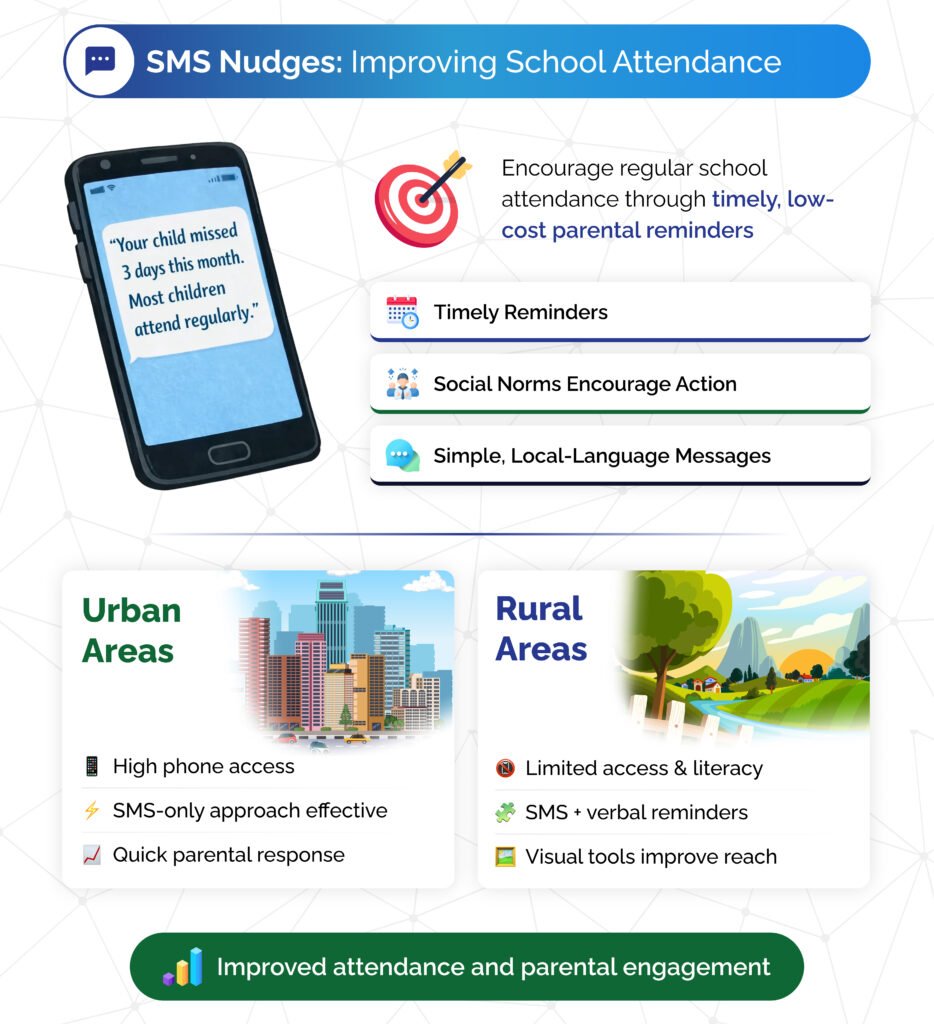
- SMS nudges: Take a simple text message. Short, local-language messages like “Your child missed 3 days this month, most children attend regularly” can boost attendance, especially in urban areas with better phone access. These messages use social norms and timely reminders to nudge parents into action. In rural areas, where access and literacy are lower, these SMS nudges could be paired with verbal or visual tools to reach everyone effectively.
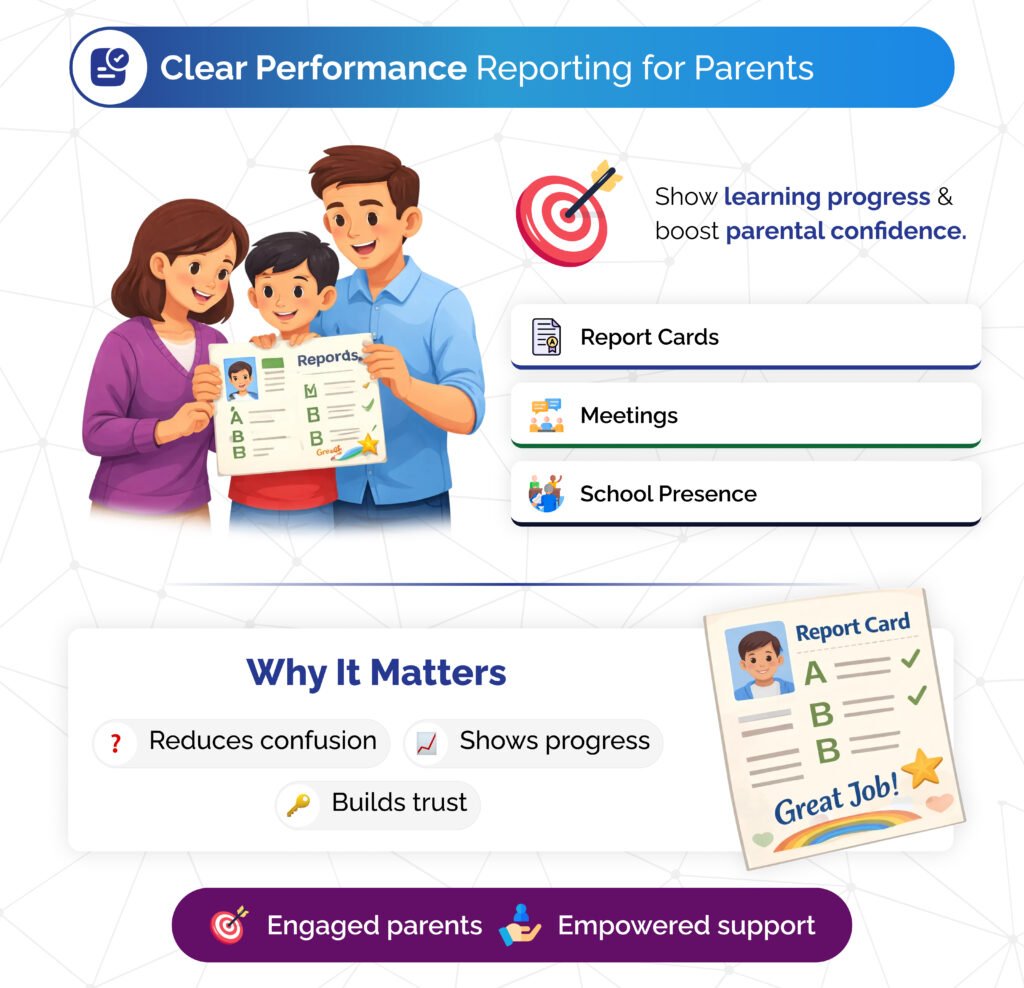
- Clear performance reporting: Sometimes, seeing progress is just as motivating as a nudge for parents. Simple report cards, increased parent-teacher meetings and community presence of the schools help parents understand their child’s learning and encourage them to support education at home. Parents often feel disconnected and overwhelmed from their child’s schooling. Feedback builds confidence, trust, and engagement, helping parents to feel empowered to help rather than overwhelmed.
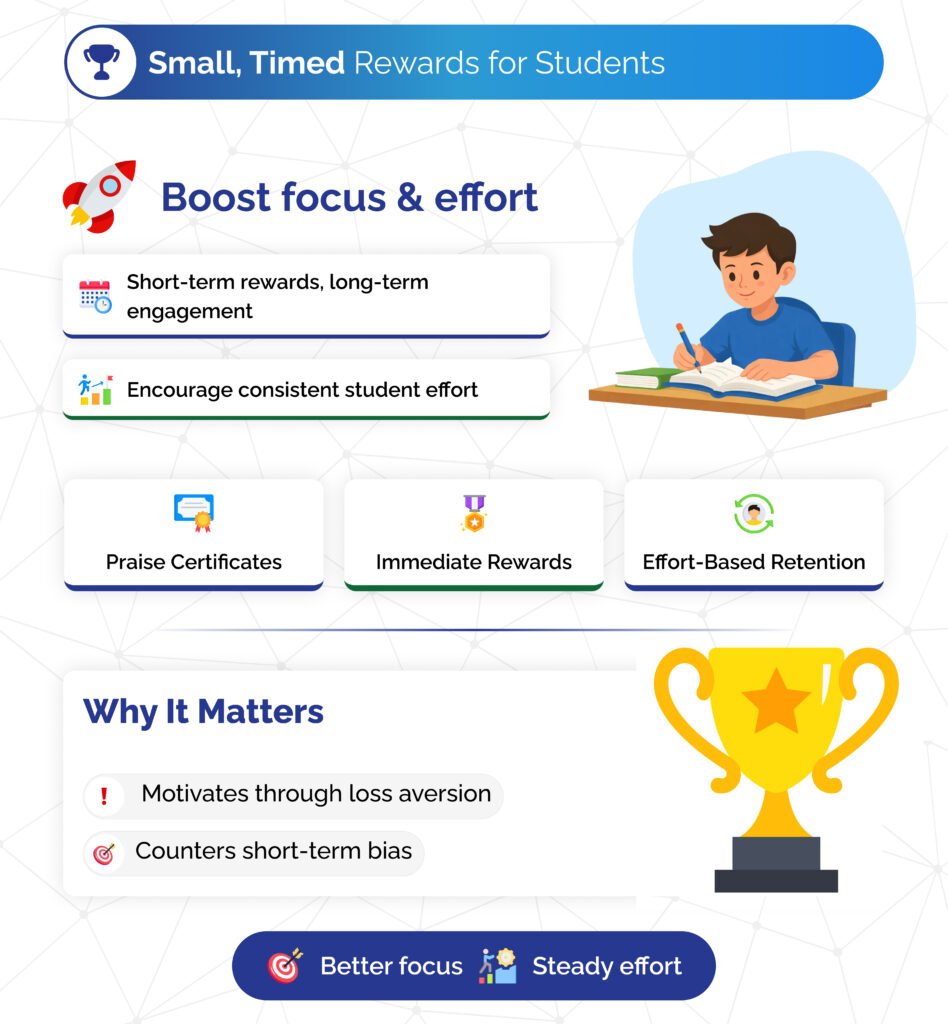
- Small, timed rewards for students: In exam-focused contexts like Pakistan’s matriculation system, giving students small, immediate incentives like praise certificates handed out in advance but kept only if effort is sustained, can motivate them to focus. This uses loss aversion to combat present bias, where short-term comfort often wins over long-term goals.
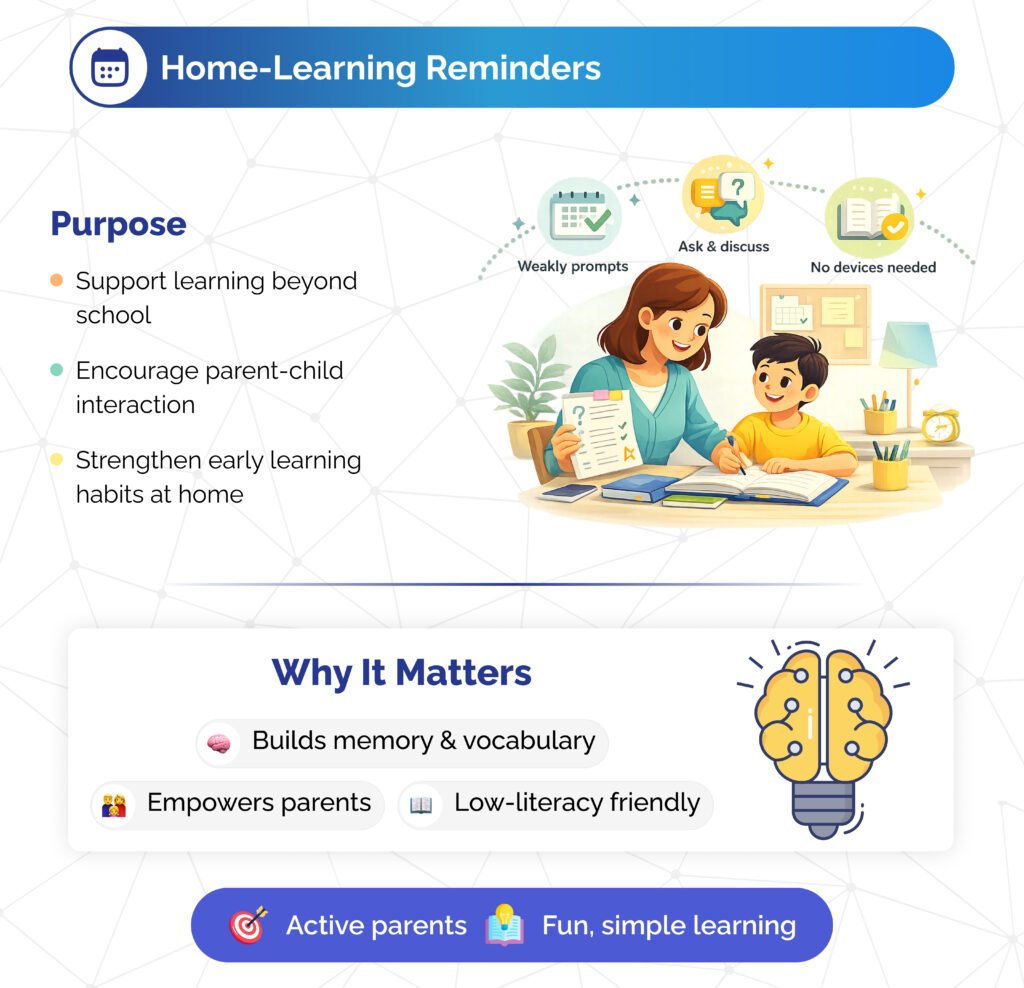
- Home-learning reminders: For younger kids, simple activity-based messages sent to parents can support learning outside the classroom. For example, weekly prompts like “Ask your child to name 3 things they saw on the way home” help build vocabulary and memory. These nudges don’t require devices and empower parents to be active participants, even in low-literacy settings.
Behavioural science reminds us that people don’t always make perfectly logical choices, especially when facing poverty, stress, or uncertainty. By designing interventions that fit local realities, testing them, and adapting accordingly, Pakistan’s education system can become fairer, more effective, and better at reaching those who need it most.
Lessons from the Field
A recent DARE-RC study in District Chiniot, Punjab aims to test the application of behavioural science interventions in reducing dropout rates between classes 5 and 6. It also examines whether frameworks like the COM-B can yield useful insights in Pakistan, despite being developed and validated in the West. Although in early stages, the study has already provided valuable insights into the application of COM-B, and the decision matrix that pre-empts parents’ enrolment decisions:
- Contextualising data collection using interpretive methods: When low-literacy rural parents were asked to respond to statements using a 1 to 5 scale, from strongly agree to strongly disagree, many found it confusing. Some selected only the first or last option, while others relied on what they thought the enumerator wanted to hear. This did not mean they lacked opinions, but rather that the format did not align with their preferred way of expressing themselves. Numeric scales often feel abstract or distant from everyday language, making it harder to capture genuine responses. The research team thus developed an interpretive matrix, translating gestures, expressions and intonation as used by parents who were largely unable to read or write. This matrix was used by field staff to code responses into a Likert-type scale, amendable to statistical analysis.
- Effective utilisation of the COM-B framework to integrate evidence for intervention development: Application of the COM-B framework highlighted high parental motivation for continuing children’s education, but low capability and opportunity to carry out the enrolment process, suggesting that interventions that aimed to increase capability and opportunity could improve enrolment outcomes.
- Distinctive underlying factor composition in the Chiniot dataset: Exploratory factor analysis to uncover latent patterns in the data showed that other scales appeared to be manifest more strongly than they did in Western applications. These included parental support skills – capturing parents’ ability to actively engage with and support their child’s education, and financial responsibility – representing parents’ perceived ability and commitment to financially support their child’s education. Rather than distinct capability, opportunity, and motivation components, we found integrated factors that combined elements across these dimensions.
Conclusion
Behavioural science is powerful because it helps explain why people act the way they do. But in Pakistan’s rural context, it must go employ creative approaches to channel the localised context and capture cultural nuance. In so doing, behavioural science can help design practical, inclusive solutions that reflect how people really think, decide, and live.
The evidence is unequivocal – behavioural science gives us a fresh approach to solving education problems by understanding why students, parents and teachers make certain choices. It helps us see the mix of emotions, skills, and perceptions that shape these decisions. When paired with simple digital tools – such as SMS, phone calls, or app-based reminders – these insights can make interventions scalable and affordable, while staying rooted in local realities.
Authors: Khadija Hammad (Communications associate, Middle School Transition Project, DARE-RC), Ayaan Rauf (Intern, Middle School Transition Project, DARE-RC), and Dr. Zainab Latif (Thematic Lead, DARE-RC)
Quality Assurance: Dr. Sahar Shah (DARE-RC Senior Research Manager)
This blog series is based on a DARE-RC research project based in Khyber Pakhtunkhwa and Islamabad Capital Territory.
Global Shifts in Education and the Move Toward Student-Centred Learning
Education has long been a global and national priority, increasingly viewed not only as a tool for individual advancement but also as a means of fostering democratic participation, social justice, and equity. The global shift toward student-centred learning can be traced to influential ideas such as John Dewey’s (1931) vision of education as a democratic practice and Paulo Freire’s (1972) advocacy for critical pedagogy. These ideas emphasised learner agency and participation, laying the foundation for approaches that foreground the learner.
Over recent decades, student-centred pedagogy has been visible across education systems worldwide. More recently, however, this shift has been embedded in a wider process of global policy alignment. Commitments made by international organisations such as United Nations Educational, Scientific and Cultural Organization (UNESCO) and the Organisation for Economic Co-operation and Development (OECD), through initiatives like Education 2030 and The Future of Education and Skills 2030, have placed equity, inclusion, and learner agency at the core of education policy.
The Rise of Measurement and Evidence in Education
Alongside these global commitments, there has been a strong emphasis on evidence in education policy and practice. Ensuring equal access to quality education, both within and across countries, has required the development of measurement systems. These allow for tracking progress, setting benchmarks, and holding systems accountable.
Yet, critics argue that this emphasis often creates pressure on educational institutions to conform to a neoliberal logic of quantifiable outcomes. As a result, aspects of education that are less tangible, such as creativity, critical thinking, or social engagement, may be undervalued or overlooked. Within this complex landscape, marked by global commitments, measurement-driven accountability, and neoliberal pressures, the shift to truly student-centred education becomes both essential and deeply challenging.
Contexts of the Global South: Postcoloniality and Vulnerability
The situation becomes even more complex in the Global South, where many education systems operate within precarious contexts shaped by postcolonial legacies, environmental risks, and political instability. Education systems often face repeated disruptions, for example caused by conflict, or pandemics like COVID-19, requiring constant rebuilding. In many cases, practices such as rote learning, closely tied to colonial histories, have persisted, reinforced by structural vulnerabilities.
Nonetheless, through participation in global education dialogues and policy frameworks, countries in the Global South are engaging in meaningful reforms. In Pakistan, this has taken the form of experimenting with Student Learning Outcomes (SLO) based education. Unlike some countries where SLOs form a comprehensive national strategy, in Pakistan implementation has been uneven and selective. Khyber Pakhtunkhwa (KP) and Islamabad Capital Territory (ICT) are two regions where this shift has been most visible, which is why they form the focus of this study.
Pakistan and the Shift Toward SLO-Based Education
Since 2006, Pakistan has attempted to introduce Student Learning Outcomes as part of national efforts to improve the quality of education. SLOs define what students should know and be able to do at each stage of schooling. These goals have appeared sporadically in curriculum frameworks, policy documents, and assessment systems, particularly at the higher secondary level.
Much of the reform effort has focused on revising curricula and examinations. However, far less attention has been paid to supporting teachers in applying SLOs in their classrooms. Teachers are expected to alter both pedagogy and assessment practices, but many receive limited training or institutional support. As a result, significant gaps remain between the theoretical ambitions of learning outcomes-based education, as reflected in policy goals and curriculum documents, and the realities of everyday teaching practice.
The Study: From Policy to Practice
This project, From Policy to Practice: Understanding Teachers’ Experiences with SLO-Based Education, examines how SLO reforms have been introduced and practiced in KP and ICT. The study follows the journey of SLO policy from national planning to classroom practice, with a focus on teachers’ lived experiences.
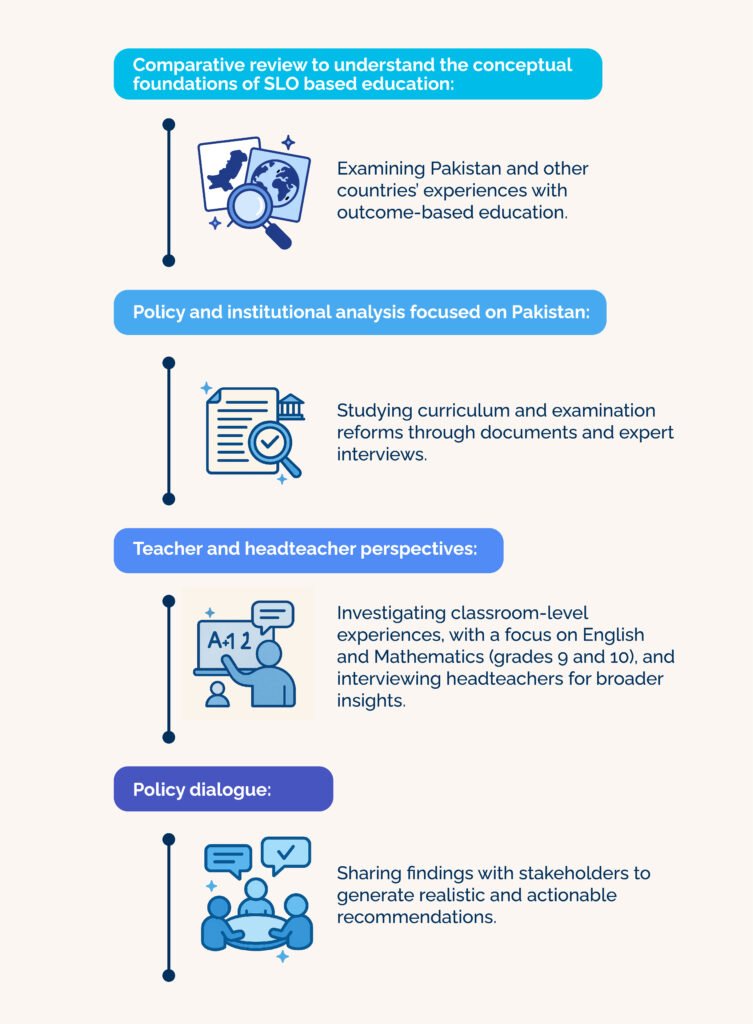
The research is organised into four phases:
- Comparative review to understand the conceptual foundations of SLO based education: Examining Pakistan and other countries’ experiences with outcome-based education.
- Policy and institutional analysis focused on Pakistan: Studying curriculum and examination reforms through documents and expert interviews.
- Teacher and headteacher perspectives: Investigating classroom-level experiences, with a focus on English and Mathematics (grades 9 and 10), and interviewing headteachers for broader insights.
- Policy dialogue: Sharing findings with stakeholders to generate realistic and actionable recommendations.
By centring teachers’ perspectives, this study aims to highlight how reforms are experienced in practice and to identify where support is most urgently needed. The findings are intended to guide policymakers, curriculum designers, and education officials in making SLO-based reforms more effective and relevant.
Series of Blogs on SLOs in Pakistan
This blog marks the start of a series authored by the study’s Senior Research Fellows who introduce different perspectives on SLO-based education in Pakistan. Each contribution focuses on a distinct angle of the reform process:
- Dr Muhammad Ilyas Khan,“SLOs-Based Education in Pakistan: A Shift Without a Paradigm Shift”, explores the tensions between the theoretical and practical aspects of SLO reforms.
- Dr Ahsan Ur Rehman, “The Role of Primary Education in Outcome-Based Education in Khyber Pakhtunkhwa”, provides institutional and expert perspectives, drawing on the experiences of education professionals in assessment, teacher training, and exam boards.
- Dr Munir Ahmad, “Shifting Mindsets: Experiences with SLO-Based Education”, highlights everyday challenges from the perspective of school headteachers.
- Dr Uzma Dayan, “Implementing SLO-Based Education: Insights from English Language Teachers in Pakistan”, offers reflections based on informal conversations with secondary school English teachers.
Led by Principal Investigators Dr Aliya Khalid, Dr Hafiz Muhammad Inamullah and research team lead Dr Hameedah Sayani, the project team aims to spark an ongoing conversation on the potential of SLO-based education in Pakistan, exploring its promises, challenges, and possibilities for adaptation through policy and practice.
Authors: By Aliya Khalid (aliya.khalid@education.ox.ac.uk), Hafiz Muhammad Inamullah and Hameedah Sayani
SLOs-Based Education in Pakistan: A Shift without a Paradigm Shift
By Professor Dr Muhammad Ilyas Khan
With the introduction of the concept of SLOs-Based education, or SLOs-Based assessment, there seems to have been a significant re-orientation of the school education system in Pakistan. Many consider this as a paradigm shift in the education of the country. The focus seems to have shifted away from ‘syllabus’ or ‘chapters to be covered’ to SLOs or Student Learning Outcomes to be achieved by the learners. On paper this has changed the focus from the ‘teacher’s teaching’ to the ‘learner’s learning’. In practice, however, the ‘shift’ seems more on paper and in documents, than in the real world of the student and the teacher, and the educational institutions. The origins of SLOs-Based education can be traced back to the idea of Outcomes-Based Education (OBE).
Origin of Outcomes-Based Education (OBE)
The idea of OBE has been associated with the works of educational thinkers including John Carroll (1963, 1989), Benjamin Bloom (1968), and Willaim Spady (1994), who reshaped the way the world thought about learning and teaching. Carroll argued that all students can learn given enough time and the suitable conditions. Bloom developed the ‘mastery learning’ approach, suggesting that education should aim at achieving deeper understanding, rather than rushing through a syllabus. In the 1990s, William Spady systematised OBE, focusing the process of education on what learners should be able to do at the end of their educational experiences and then designing the system backwards from those outcomes.
These OBE ideas were paradigmatic in the sense that they aimed at a shift in the focus from teaching to learning. Teachers were now expected to ensure that students could demonstrate knowledge, understanding, and application of knowledge, and its possible transfer it to new contexts. The ultimate promise of OBE was equity: no child left behind simply because they learned at a different speed or in different ways than others.
OBE in Pakistan’s Context: A Shift Without a Paradigm Shift?
There has been an attempt in Pakistan during the previous two decades to echo this global wave of a radical shift in the focus and practice of education. The Curriculum 2006 reflected a significant attempt at introducing learning outcomes-based concepts in education. The Single National Curriculum (SNC) 2020 pushed SLOs further to the centre of discussion. The curriculum emphasised the introduction of detailed SLOs.
The main aim of the SLOs based curricula and assessment indicatives was to ensure authentic learning and assessment in educational institutions. However, like other education policy reforms in the context of Pakistan, the SLOs-based educational and assessment ideals seem to have a diluted version in practice. For instance, the focus of pedagogical practices still revolves around textbooks teaching, coverage of syllabi, and preparation of students for achieving higher grades in exams. Without proper orientations and professional development programmes, teachers might copy SLOs into lesson plans like bureaucratic checklists without real thought about how they will be taught or assessed.
This is what could be termed as a ‘shift’ without a ‘paradigm shift’. The original philosophy of OBE is about rethinking assessment, rethinking time, and rethinking the very role of the teachers and students in the educational process. For instance, the role of teaching as envisioned in the OBE philosophy has not been radically transformed from ‘delivery of content’ to ‘facilitation of learning’.
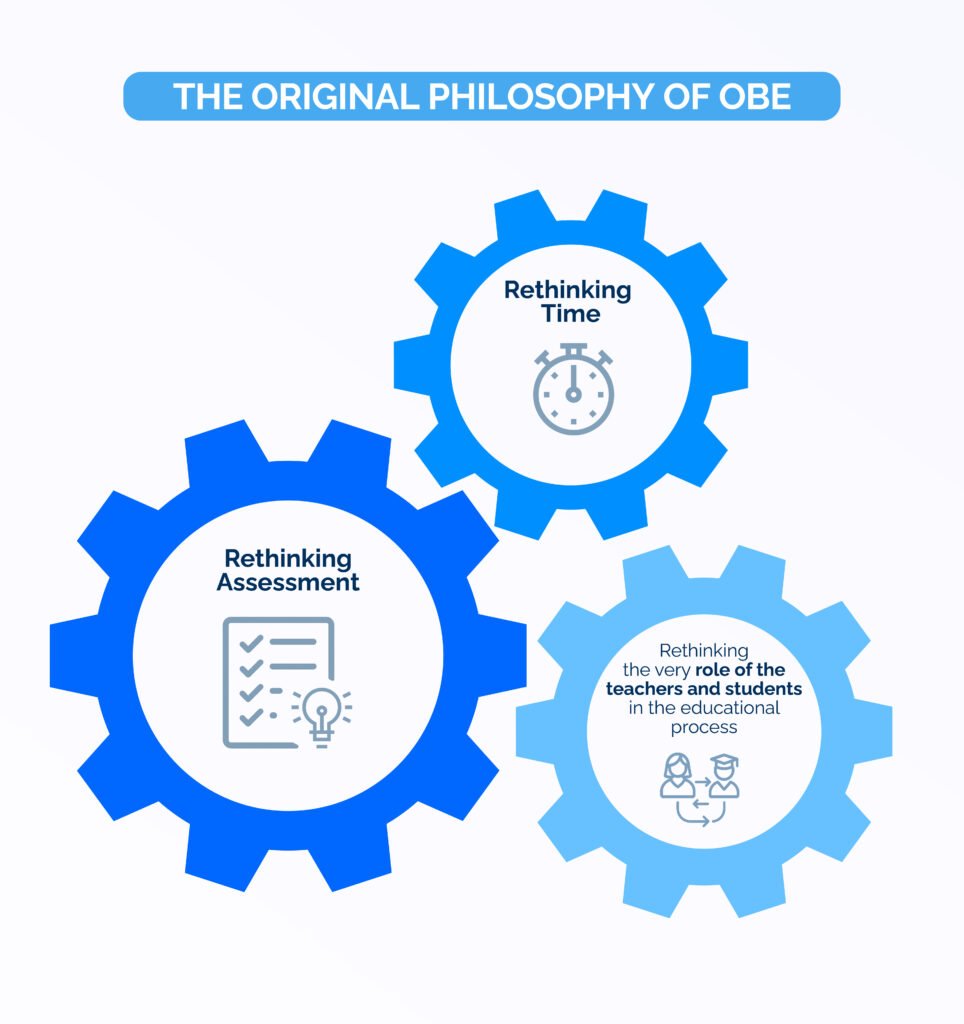
Challenges
OBE faces several challenges in the Pakistani context when it comes to its practical implementation. Assessment practices for instance still focus on grades, marks, and rote-learning rather than on real understanding or mastery of concepts. Teachers who are the drivers of any substantial change in an education system have not been adequately prepared for this change.
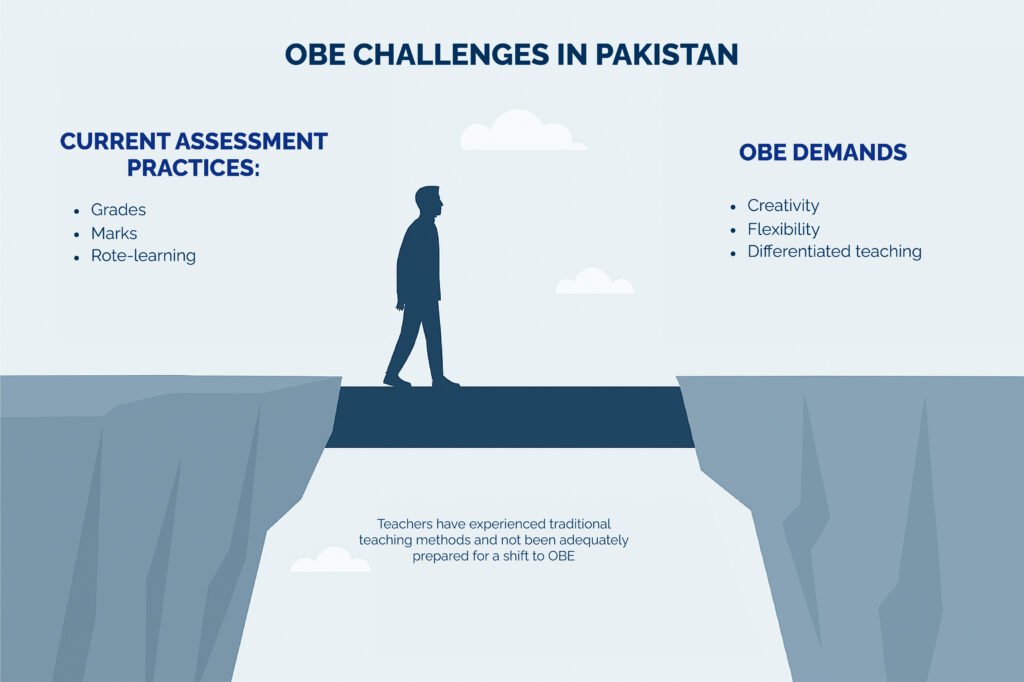
OBE demands creativity, flexibility, and differentiated teaching. But most teachers have only ever experienced traditional methods themselves, so expecting them to implement a sophisticated new philosophy overnight seems unrealistic. Creativity in this context refers to designing and implementing innovative learning experiences that enable students to demonstrate clearly defined outcomes through diverse activities and assessment methods. Flexibility is generally a teacher’s ability to adjust teaching pace, teaching strategies, and assessment approaches in line with individual learner needs. Differentiated teaching helps teachers in tailoring their instruction to the diverse needs, abilities, and learning styles of students. Traditional teaching methods, on the other hand, are often teacher centred, focus on content delivery, and structure. In traditional teaching, for instance, in a mathematics class, each student might be required to complete the same exercises and take the same test on fractions at the end of the week, regardless of whether they have developed a conceptual understanding. In an OBE the lesson may begin with a specification of measurable outcomes such as ‘students will be able to represent and compare fractions using visual models’. Such lessons may employ a variety of instructional methods, pacing, and assessments to ensure each learner reaches mastery.
While the philosophical underpinnings of OBE are compelling, its implementation poses significant challenges, particularly in developing education systems. Successful OBE implementation needs well-prepared teachers who can design outcome-aligned curricula, employ formative assessment strategies, and make use of differentiated instruction effectively. Many teachers in resource-limited contexts lack both the pedagogical training and institutional support needed to enact such complex reforms (Jansen, 1998). Large class sizes, rigid timetables, inadequate learning materials, and exam-driven accountability systems further constrain the flexibility and learner-centred focus that OBE demands.
What then is needed to incorporate the concepts of OBE and SLOs, in letter and spirit? To do so there is need for systematic professional development initiatives for teachers, and educational leaders. The proponents of OBE believed in a powerful, learner-centred vision of education. If Pakistan really wants to move from traditional to outcomes-based education, there is need for a paradigm shift in the aims, process, assessment, and outcomes of education.
Author: Dr Muhammad Ilyas Khan (Professor, Department of Education, Hazara University, Pakistan, drmuhammadilyaskhan7@gmail.com)
Learn more about Outcome-based Education and SLO-based Education from Professor Dr Muhammad Ilyas Khan.
The Role of Primary Education in Outcome-Based Education in Khyber Pakhtunkhwa
By Dr Ahsan Ur Rehman
In the complex historical and political landscapes of Khyber Pakhtunkhwa (KP), Pakistan, education is often regarded as a source of opportunity. Although this project focuses on Student Learning Outcomes (SLOs), in order to explore how learning can be “measured” in a way that demonstrates conceptual understanding, the first question must address the pedagogy that underpins this concept, namely Outcome-Based Education (OBE). OBE is an approach that emphasises measurable learning outcomes over rote memorisation and has been gradually gaining importance in the context of Khyber Pakhtunkhwa, Pakistan. This blog examines the importance of strong primary schooling as the basis for implementing OBE.
Primary education, typically spanning ages 5 to 10, forms the foundation of any educational system. In Khyber Pakhtunkhwa, where literacy rates remain around 55% (with notable gender disparities), investment in primary education is not only beneficial but necessary. OBE shifts the emphasis from teacher-centred instruction to student-centred outcomes such as critical thinking, problem-solving, and life skills. Without a sound primary base, achieving these outcomes remains unlikely.
Research highlights how OBE supports critical thinking at the university level. However, this benefit is only realised if primary education provides the necessary skills early on. In KP, primary schools often contend with outdated curricula and limited resources, as highlighted in studies examining the relationship between budget allocations and learning outcomes. These studies indicate that sufficient funding and effective expenditure correlate directly with improved student performance, underscoring that reform at the primary level is essential for the success of OBE.
Consider the case of a child in Peshawar or Swat entering school without foundational literacy or numeracy. OBE requires students to demonstrate specific competencies, such as applying mathematics to practical contexts or working collaboratively. If primary education does not establish these basics, subsequent educational levels become significantly more challenging.
KP also faces structural barriers, including conflict-affected areas, cultural constraints on girls’ education, and teacher shortages. In this context, OBE offers a framework that emphasises inclusivity, values, and life skills, as reflected in Pakistan’s national curriculum reforms. Integrating OBE principles at the primary level could contribute to holistic development, addressing social, emotional, and intellectual growth.
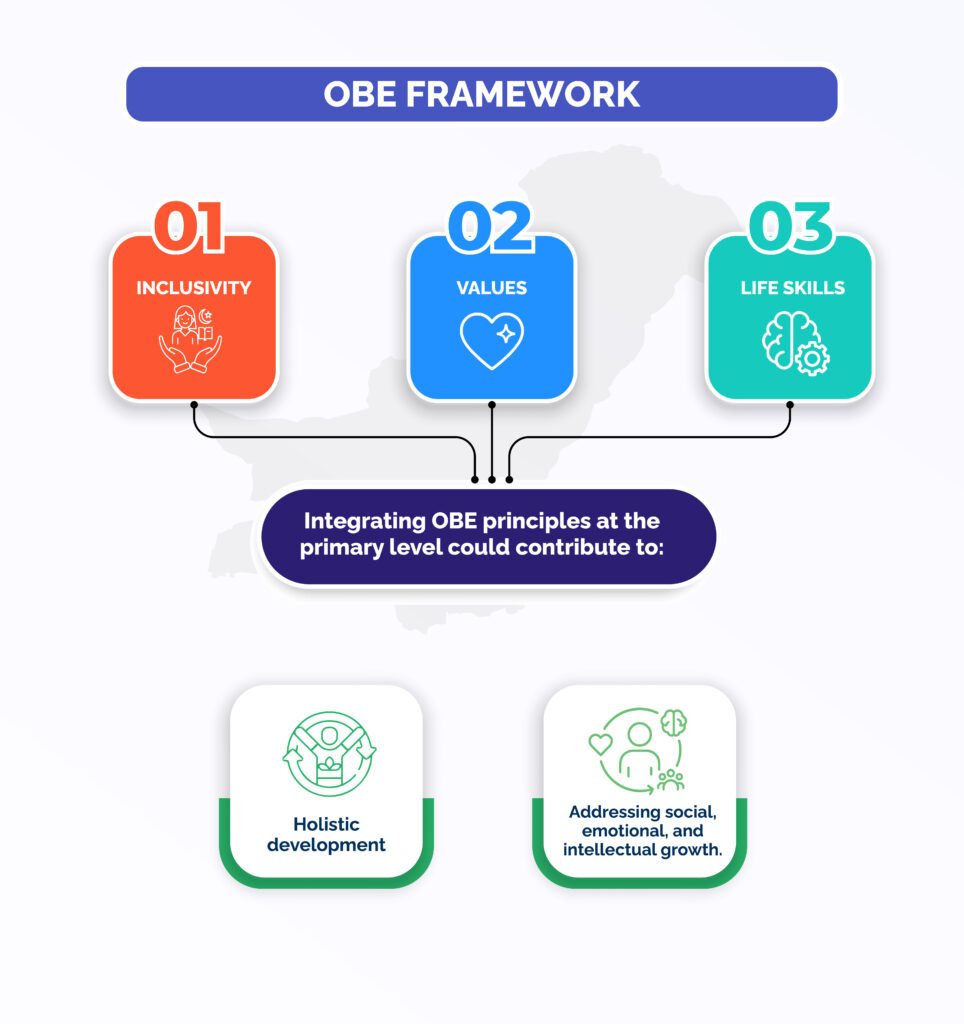
Teachers’ perspectives are critical in this process. Empirical studies have shown that educators in KP are open to reforms aligned with OBE, particularly those involving updated teaching practices and curriculum design. By focusing on outcomes such as creativity and resilience, primary education can support children in underserved areas, lower dropout rates, and encourage sustained learning.
The measurable structure of OBE also allows for improved accountability. Accountability, for example, in terms of that to what extend effective teaching has been done, to what extend leaner has achieved the curriculum objectives. All the relevant data can be obtained through teacher-made and standardised tests and assessment. In KP, where primary enrolment rates are rising but quality indicators lag, tracking outcomes can help ensure resources are used effectively. This may facilitate targeted interventions, including teacher training and community engagement, which in turn could contribute to improved educational quality and equity.
The broader effects of strengthening primary education through OBE extend beyond individuals. It has implications for economic development, poverty reduction, and social stability in KP. By equipping students with relevant skills, education systems can help prepare future generations for challenges such as climate change and technological transformation.
In conclusion, primary education is not only the starting point but also the key determinant of OBE’s success in Khyber Pakhtunkhwa. Policymakers, educators, and communities need to prioritise reforms including increased budgets, teacher training in OBE methods, and equitable access. Evidence suggests that such investments yield long-term benefits in the form of skilled citizens and improved social outcomes.
Author: Dr Ahsan Ur Rehman (Assistant Professor, Sarhad University of Science and Information Technology, Peshawar
Shifting Mindsets: Experiences with SLO-Based Education
By Dr Syed Munir Ahmad
With over three decades of experience in teaching and teacher education, my engagement with schools, and with both prospective and in-service teachers, has consistently centred on bridging the theory–practice divide. This professional journey has been guided by a deep commitment to the cause of education and to achieving meaningful student learning outcomes. The same desire for self-appraisal and improvement that gravitated me from school teaching to university teaching also opened new social, academic, and professional vistas for collaboration with national and international institutions working across diverse areas of education.
In addition to my university role, I have been serving as the Principal of the University Public School, University of Peshawar, as its eleventh principal and the first proud alumnus to lead the institution since January 2, 2024. During this time, I have sought to strengthen the school, not only through its physical uplift but also through a sustained focus on academic and professional development. In my dual role as a teacher educator and school head, I regard Continuous Professional Development (CPD) of teachers as a cornerstone of school effectiveness, closely aligned with a steady paradigm shift from traditional teacher-centred teaching to more student-centred learning, aimed at the all-round development of students across all levels, both school and college.
Breaking the Textbook Habit
When I first asked my teachers to design lesson plans around Student Learning Outcomes (SLOs), the response was cautious. For years, they had worked within a system where teaching meant “covering the textbook” and assessment meant “testing recall.” Asking them to focus on what students could do with knowledge – rather than what they could memorise – was asking them to change deeply ingrained habits.
When Policies Meet the Classroom Wall
This is the reality of Pakistan’s shift to SLO-based education. Policies and frameworks look impressive, but inside classrooms, change is slow and challenging. Teachers are not unwilling, but they are conditioned by years of routine and constrained by systemic issues. Continuous Professional Development (CPD) remains limited, class sizes are large, and student backgrounds diverse – especially in public schools where children from low-income families study alongside others. In such contexts, simply telling teachers to “teach for outcomes” is not enough.
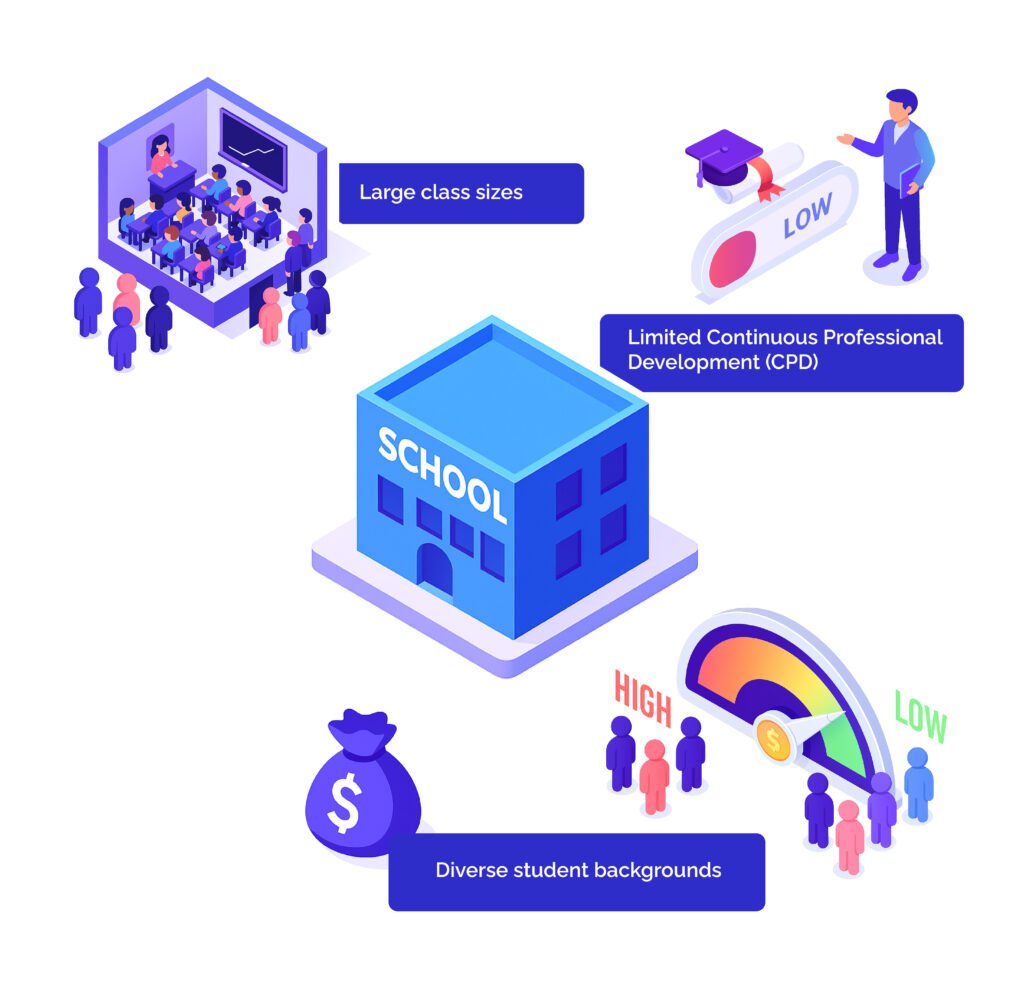
Small Steps, Big Shifts
What has helped? Conversations, peer sharing, and gradual guidance. Some teachers began experimenting with group activities, others with questioning techniques that go beyond recall. It is slow progress, but it matters. Students, too, need time. For them, a question that requires analysis rather than reproduction often feels like it is “out of course.” Helping them unlearn old ways of studying is part of the journey.
Unlearning Rote, Embracing Understanding
I am convinced that SLOs are the right direction. They force us to ask: what knowledge, skills, and attitudes should students develop to thrive in today’s world? But for this shift to work, teachers need more than policy mandates – they need resources, training, and encouragement. Policymakers must listen to their voices, and communities must recognise the complexity of classroom realities.
From Rote to Real Learning
In public schools, the change is ongoing. It may appear imperfect, sometimes frustrating, but also full of possibility. Each small step towards outcome-based teaching is a step away from rote memorisation and towards real learning. And in that journey lies the hope for a stronger, more thoughtful generation of learners.
Author: Dr Syed Munir Ahmad (Associate Professor, Institute of Education and Research, University of Peshawar)
Implementing SLO-Based Education: Insights from English Language Teachers in Pakistan
By Dr Uzma Dayan
The main purpose of Student Learning Outcomes (SLO) based teaching, and assessment is to foster creativity and discourage rote memorisation, enabling students to become critical and scientific thinkers rather than mere reproducers of information. This approach is pursued through core curricular subjects such as mathematics, science, languages, and social sciences. In contexts where English is taught and used both as a foreign language and as a medium of instruction, the shift from traditional practices to SLO-based education presents unique challenges. In such a situation, teachers and students face a dual task: learning English as a subject while simultaneously using it to study other disciplines for learning and examination purposes. This blog post explores the perceptions and experiences of English language teachers of SLO-based education in Pakistan. The Ministry of Education with The National Curriculum of Pakistan (2022) initiated this policy in two major regions; the Islamabad Capital Territory (ICT), the federal capital, and Peshawar, the capital of Khyber Pakhtunkhwa and one of its major cities across all school levels.
Policy Shift and Teachers’ Readiness
The reform aimed to discourage cramming and encourage students to demonstrate conceptual understanding in examinations. Under the new system, annual intermediate exams conducted by the Boards of Intermediate and Secondary Education follow a uniform SLO-based framework, with subject specialists designing papers to assess knowledge and skills rather than rote recall. As quality education depends highly upon quality training, for this policy to achieve its intended purpose, teachers, as key stakeholders and agents of change require proper pre-service and in-service training. SLO-based teaching in Pakistan emphasises clear, measurable outcomes, prioritising conceptual understanding, critical thinking, and problem-solving skills over memorisation. However, successful implementation depends not only on policy design but also on how teachers perceive, interpret, and act upon these reforms. As Ali (2006) notes, understanding the role of values, context, culture, and language in shaping learning and decision-making is essential, particularly given that resistance to change is often a natural response.
To explore these dynamics, a scoping exercise was conducted in Islamabad and Peshawar to listen to the perspectives of teachers. Informal interviews with 12 secondary school English language teachers provided valuable insights into the challenges and opportunities of implementing SLO-based pedagogy and assessment. Their reflections highlight both the promise of the policy and the pressing need for sustained professional development to support meaningful educational transformation.
Training Gaps Limiting Success
The conversations revealed significant gaps in the professional preparation and training of English language teachers in Khyber Pakhtunkhwa. A large proportion of teachers responsible for teaching English neither possessed a degree in English language or English Language Teaching (ELT), nor had they received any form of in-service training following the introduction of the Student Learning Outcomes (SLO)-based education system. For instance, one respondent who held a degree in Business Studies and had previously worked for nine years in the banking sector was found teaching English to students of Grades 9 and 10. She described her experience as highly challenging, particularly in adapting to the SLO-based pedagogy. As she explained:
“I do not know how to teach students for exams in the light of SLO. Instead, I prepare them for exams based on old papers because I was never trained to frame objectives for a specific subject.”
These experiences point to a systemic issue in the recruitment and professional development of teachers. The recruitment policy in KP currently requires only a BS or Master’s degree and success in the National Testing System (NTS) examination for induction into high schools. Neither pre-service training nor teaching certification is mandatory. Newly appointed teachers are expected to undergo compulsory nine-month induction training. However, these trainings are conducted not by universities or specialised teacher education institutions but by subject specialists from colleges and schools.
One teacher described her induction training as overly general, with little to no focus on subject-specific pedagogy or the implementation of SLO-based teaching and assessment. Similarly, a senior teacher with over 23 years of experience in the system acknowledged that her academic qualification was not in English, but she had been assigned to teach Grade 10 English. She noted that both students and teachers faced difficulties in adapting to the SLO-based framework, particularly in the absence of refresher courses or in-service training. Although she worked hard to help her students understand the material, she admitted that the process was equally demanding for her as an educator.
Trained Teachers: Successful Implementation
By contrast, teachers who had undergone pre-service training at university-affiliated teacher education institutes were found to adopt more modern and interactive pedagogical approaches. These included classroom discussions, small seminars, jigsaw activities, and other activity-based methods. Such teachers emphasised student engagement and communication in English. Nevertheless, they also faced challenges, such as students’ frequent code-switching to local languages, which hindered fluency. One teacher recommended the introduction of pre-academic English language classes to strengthen students’ linguistic foundation before they transition into mainstream English instruction.
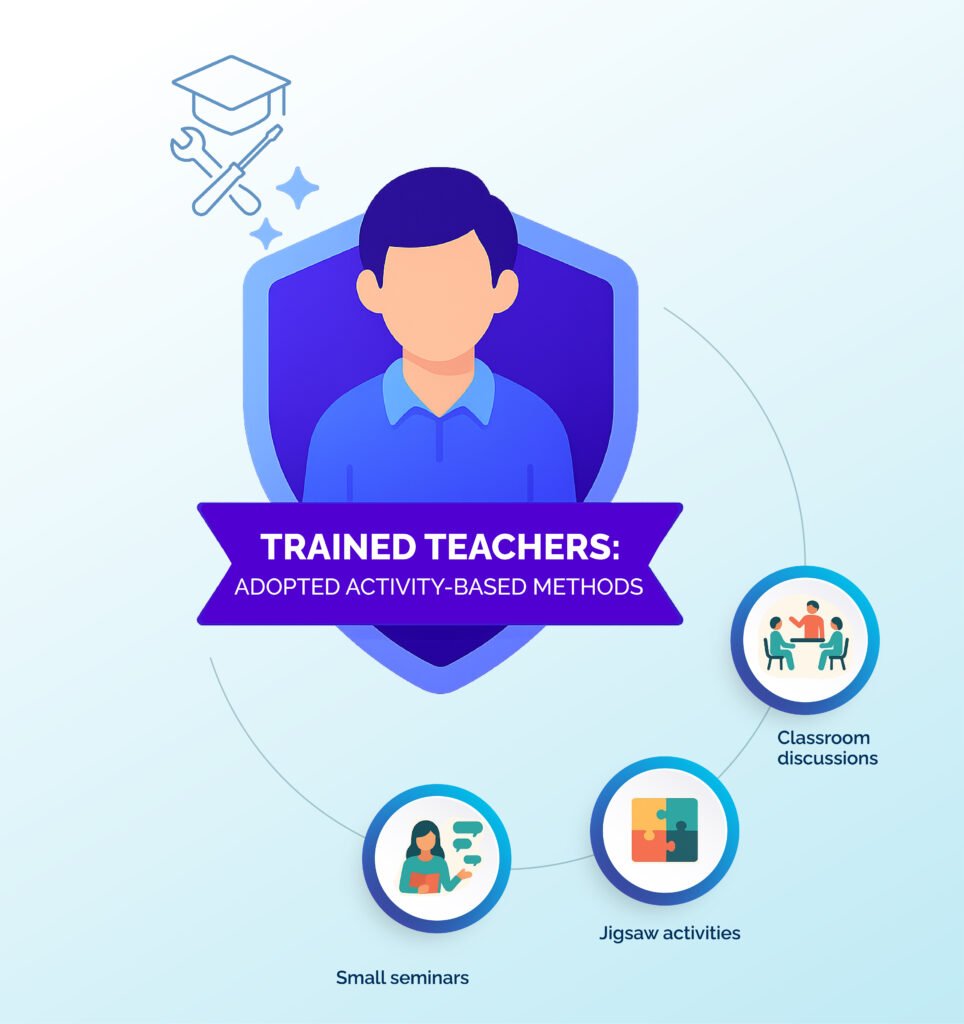
Successful Policy Shift: Mandatory Pre-service and Refresher Training
Listening to and understanding the experiences of teachers led to three main understandings. Firstly, teachers without any training struggled the most with adapting to the SLO-based system, finding it equally difficult for themselves and their students. Secondly, senior teachers with outdated training and lack of refresher opportunities faced similar challenges due to limited exposure to new methodologies. Finally, teachers with formal pre-service training employed more effective and interactive practices, though they still encountered systemic barriers such as students’ weak English proficiency.
Across all three, teachers stressed the need for structured professional development. The study recommends making pre-service training mandatory, introducing regular subject-specific in-service programs, and offering refresher courses for mid-career and senior teachers. Recruitment reforms are also necessary to ensure that entry into teaching depends on subject-specific competencies aligned with SLOs. This scoping exercise demonstrates that without consistent training and support, teachers and students will continue to face difficulties in bridging the gap between policy and practice in English language teaching in Pakistan.
Author: Dr Uzma Dayan (Lecturer, Institute of Education and Research, University of Peshawar)
This blog series has been copy-edited by Maryam Beg Mirza (Assistant Consultant, Education, OPM) and quality assured by Dr Sahar Shah (Senior Research Manager, DARE-RC).